Transmission Slipping? Diagnose It Before Approving a Rebuild

If your engine revs higher but the car hesitates or fails to pick up speed, you’re likely dealing with transmission slipping. Check your fluid level and color if it’s safe to do so, avoid long drives until you know more, and schedule a diagnostic before the problem gets worse or more expensive.
TL;DR:
- CVTs and hybrid drivetrains can mimic slipping, so tell the shop your transmission type before interpreting RPM flare as a failure.
- Check fluid only if your vehicle has an accessible dipstick; sealed systems require a shop, and a strong burning smell or heavy leak calls for towing.
- Ask for a road test, code and live data review, fluid and pan inspection, and pressure tests before approving internal inspection or rebuild work.
- Repairs can range from about $12 for a fluid top off to several thousand dollars for a rebuild, depending on diagnostic findings and internal damage.
Table of Contents
- Signs and symptoms of a slipping transmission
- What’s actually happening inside the transmission
- Common causes, from simplest fix to most serious
- Checks you can safely do before visiting a shop
- What a thorough professional diagnostic looks like
- Repair options and what they typically cost
- Is it safe to keep driving?
- Preventing transmission slipping before it starts
- A shop owner’s view on diagnosing slips correctly
- How we handle transmission diagnostics at Chapman’s
- FAQ
- Sources
Signs and symptoms of a slipping transmission
True slipping feels distinct once you know what to look for. The clearest sign is RPM flare under load, where the engine revs up but the car doesn’t accelerate at the same rate, as if the transmission briefly let go of the gear. You may also notice delayed or sluggish shifts, gears that hunt between ratios, or the car surging slightly at steady speed.
- Engine RPM climbs without matching road speed increase
- Delayed engagement when shifting from park to drive, or hesitation on acceleration
- Grinding, whining, or clunking noises during gear changes
- A burning smell, visible fluid under the car, or a dashboard warning light
Symptoms including jerking, hesitation, trouble shifting, RPM flare, unusual noises, burning smell, and fluid leaks are the common signals shops look for, and CVTs or hybrid drivetrains can mimic some of these without true slipping being involved, according to AAA Club Alliance. If your vehicle has a CVT, the “slipping” sensation is sometimes a programmed response rather than a failure, so it’s worth mentioning your transmission type when you call a shop.
What’s actually happening inside the transmission
Slipping happens when the engine’s RPM rises without a matching increase in output speed, because the internal apply element, whether a clutch pack or band, loses grip or doesn’t get enough hydraulic pressure to hold firmly. That’s different from shuddering, which feels like a vibration during a shift, or delayed engagement, which is a lag before the gear catches. A slipping transmission is marked by RPM rise without a corresponding speed increase under load, distinct from shudder or delayed shift, according to Capital One. Hydraulic pressure and friction material condition drive almost every case, which is why fluid and pressure are the first things a technician checks.

Common causes, from simplest fix to most serious
Shops typically work through causes in order of likelihood and cost, starting with the cheapest explanations before assuming the worst.
- Low or aerated ATF, usually from a leak, which is common and often an easy fix once the leak is sealed and fluid is topped off.
- Degraded or contaminated fluid, where a flush or change can help if there’s no internal damage yet, though replacing fluid won’t repair worn mechanical parts according to AAA.
- Faulty solenoids or valve body hydraulic issues, which disrupt the pressure signals that control shifting and engagement.
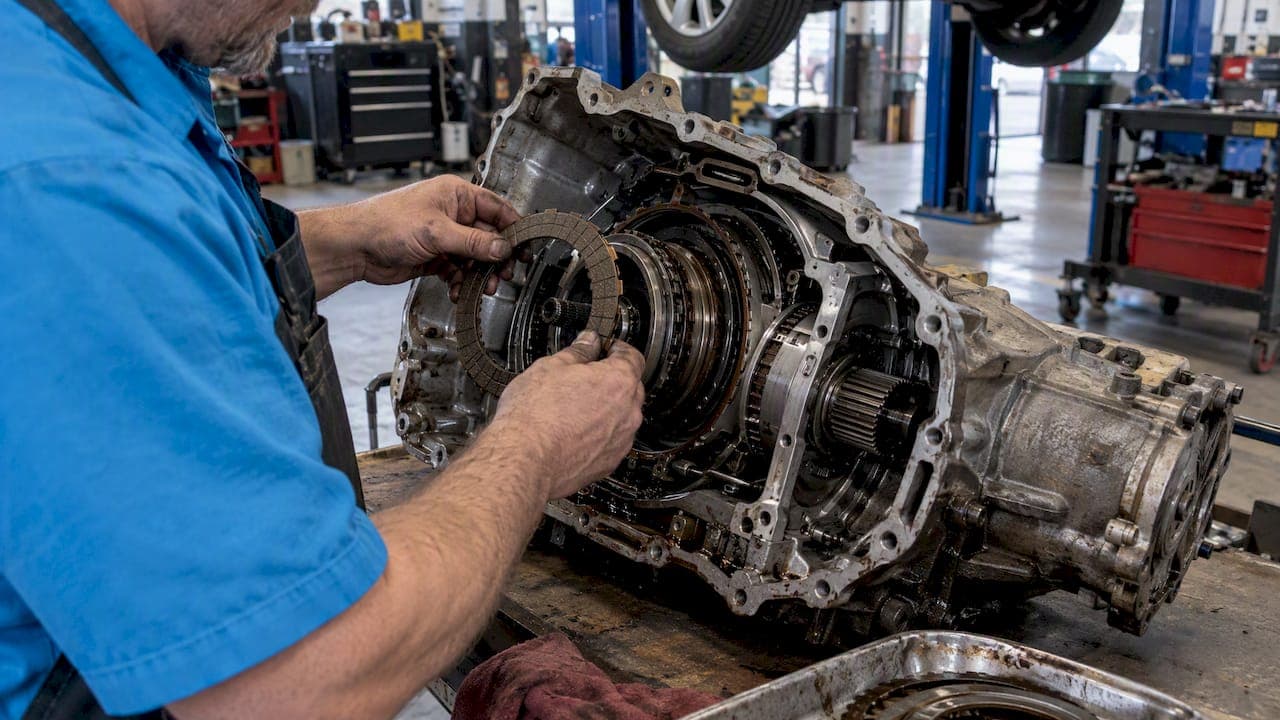
- Worn clutch packs, pump wear, or other mechanical damage, which usually means a rebuild is needed.
- Torque converter failure or internal contamination, often confirmed when metal particles show up during a pan inspection.
- Electronic or TCM calibration problems, where the computer’s shift commands don’t match what the hardware needs.
The first three causes are frequently resolved without a teardown. The last three usually mean more invasive, and more expensive, work.
Checks you can safely do before visiting a shop
Before you book an appointment, a few owner-level checks can save time and help the technician narrow things down fast.
- Check ATF level and color with the engine warm, using the dipstick if your vehicle has one; many newer vehicles use a sealed fill system instead, so confirm which type you have before assuming you can check it yourself, per AAA.
- Look under the car for leaks near the pan gasket or cooler lines, and smell the fluid for a burnt odor, which signals overheating or friction material breakdown.
- Write down exactly when the slip happens: which gear, what speed, how hard you’re accelerating, and whether the engine is hot or cold.
- Stop driving and arrange a tow if you see fluid pouring out, smell burning strongly, or the car won’t engage a gear at all.
Pro Tip: Take a short video or voice memo describing the symptom right when it happens; a technician can diagnose faster with exact conditions than with a vague description after the fact.
What a thorough professional diagnostic looks like
A methodical diagnostic sequence, from symptom verification to pan inspection, separates fixable hydraulic or control issues from mechanical wear that requires teardown, according to the Gearbox Insider troubleshooting guide. Here’s the sequence a careful shop follows:
- Verify the complaint with a road test, confirming the exact gear, speed, and throttle position where slipping occurs.
- Scan for stored codes and review live data, including line pressure and solenoid or TCM output signals.
- Check fluid level and condition, then drop the pan to inspect the magnet for metal particles.
- Run hydraulic and line-pressure tests to confirm whether solenoids or the valve body are holding pressure correctly.
- Inspect internally for torque converter or clutch pack wear only when pressure tests and pan inspection point that direction.
Transmission slips range from a fluid top-off costing around $12 to a multi-thousand-dollar rebuild, and the Gearbox Insider guide notes the exact cost depends entirely on accurate diagnosis. Skipping straight to a rebuild without this sequence is how owners end up paying for work they didn’t need.
Repair options and what they typically cost
Costs vary widely because “transmission slipping” covers everything from a $12 top-off to a full rebuild, so accurate diagnosis is what narrows the range for your specific case.
- A fluid top-off or full change and flush helps when low or degraded fluid is the root cause, and it’s the least expensive fix available.
- Leak repairs, including pan gaskets, seals, or cooler lines, often resolve slipping caused by fluid loss, usually paired with a pan and filter service.
- Solenoid or valve body repair addresses hydraulic control problems at a moderate cost compared to internal mechanical work.
- Torque converter replacement, often needed when metal particles show up on the pan magnet, comes with a fluid flush and carries a higher price tag.
- A full rebuild or reman transmission is the most expensive option, reserved for worn clutch packs, pump damage, or extensive internal wear.
Is it safe to keep driving?
Short trips may be fine in mild cases, but only after you’ve checked fluid level and ruled out visible leaks. Driving longer distances with pronounced slipping risks overheating and can turn a repairable issue into a full rebuild. If you see fluid pouring out, smell burning, or the transmission won’t engage at all, stop and arrange a tow rather than risking further damage.
Preventing transmission slipping before it starts
- Follow your manufacturer’s ATF type and interval, and check your owner’s manual, since many newer vehicles use sealed systems rather than a dipstick, per AAA.
- Fix leaks and cooling system issues promptly rather than letting fluid run low over time.
- Schedule regular fluid checks if you tow heavy loads or drive in stop-and-go traffic often.
- Avoid aggressive towing, overloading, and hard launches, which all stress clutch packs and hydraulic pressure.
A shop owner’s view on diagnosing slips correctly
We’ve seen too many owners quoted for a rebuild when a $12 fluid issue was the real cause. A methodical check, fluid, codes, pressure, pan, before any parts get replaced is the only way to know for sure.
— J.B. Chapman
How we handle transmission diagnostics at Chapman’s
We run the full diagnostic sequence before recommending any repair, and every visit includes a digital inspection with photos so you see what we found.

We offer same-day diagnostics in most cases, loaner cars while your vehicle is in the bay, and a warranty on the repair itself. If you’re noticing RPM flare, delayed shifts, or fluid under your car, schedule a transmission diagnostic with us and get a written estimate before anything is touched.
FAQ
How do you fix a slipping transmission?
The fix depends entirely on the cause: a fluid top-off or change resolves low or degraded ATF, while worn clutch packs or a failing torque converter need parts replacement or a rebuild. A proper diagnostic, including a pan inspection and pressure test, identifies which repair actually applies before any work starts.
Is it okay to drive with a slipping transmission?
Short, mild slipping may be safe to drive a short distance, but pronounced slipping risks overheating and further internal damage the longer you drive. If fluid is leaking heavily, you smell burning, or the car won’t engage a gear, arrange a tow instead of continuing to drive.
How do you tell if your transmission is slipping?
The clearest sign is engine RPM rising without a matching increase in road speed, often alongside delayed shifts, gear hunting, or unusual noises. A burning smell or fluid leak underneath the car points toward the same issue, according to AAA Club Alliance.
How much does it usually cost to fix a slipping transmission?
Costs range from a low-cost fluid top-off to a several-thousand-dollar rebuild, according to the Gearbox Insider guide, with the exact cost depending on what the diagnostic finds. Solenoid or valve body repairs typically fall in a moderate range between those two extremes.
Sources
- How to Diagnose Transmission Slipping: Complete Troubleshooting Guide | Gearbox Insider
- How to catch transmission problems before they get expensive | AAA Club Alliance
- Automatic transmission fluid service | AAA
Recommended
Questions about your vehicle?
Chapman's Automotive is in Craig, CO — serving the Yampa Valley. Call 970-550-2883 or book online and we'll take a look.