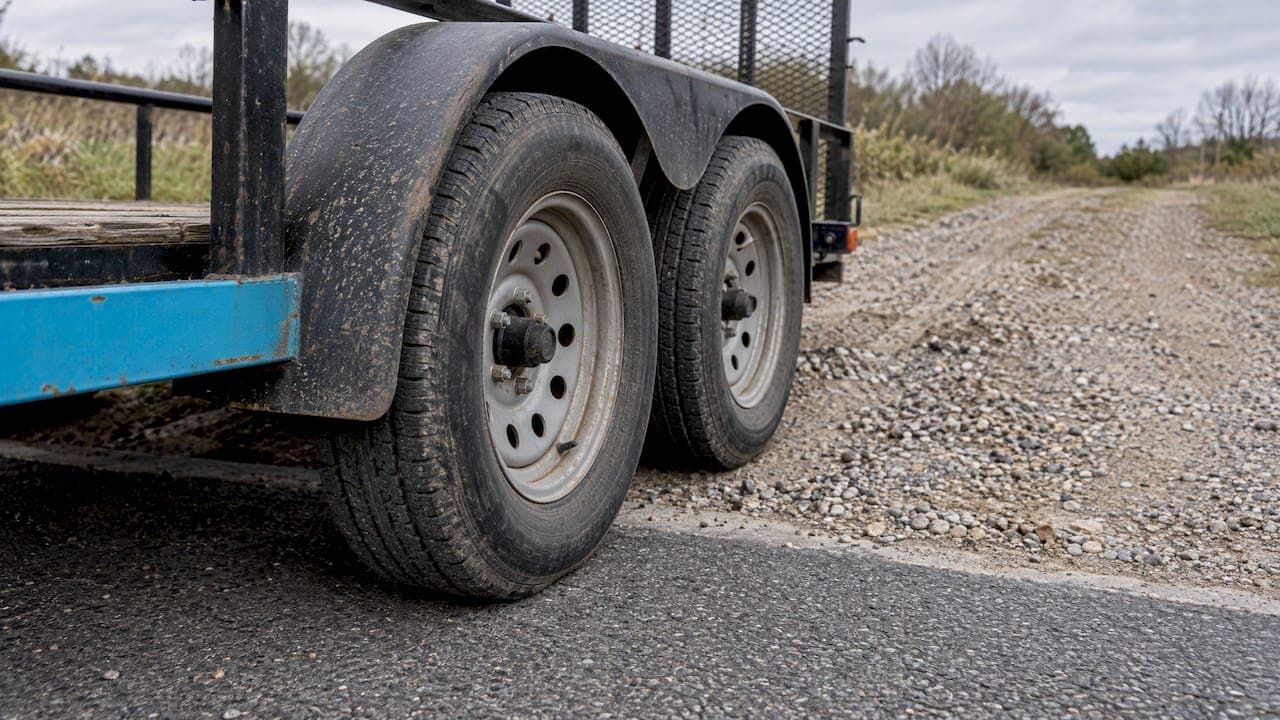
Bias vs. Radial Trailer Tires: Highway Miles or Rough Ground?

Radial tires are the better choice for most travel trailers and campers that spend real time on the highway, thanks to a smoother ride, longer tread life, and cooler running temperatures. Bias-ply tires still earn their keep on utility and off-road trailers that crawl over rough ground at low speeds, where a stiff sidewall and a lower price tag matter more than highway comfort.
TL;DR:
- For mixed use, favor radials when highway miles dominate; reserve bias tires for rough, unpaved jobs at low speeds, where their stiff sidewalls resist impacts.
- An R or the word RADIAL marks radial construction; D or no R indicates bias, while ST identifies trailer service, not construction.
- Before buying, match the tire’s size and load to the trailer’s GVWR and axle rating, then confirm the wheel can carry that load.
- Check cold pressure monthly and before long trips; do not mix constructions unless the manufacturer approves, and inspect tires for age cracks and bulges.
Table of Contents
- Construction basics: bias ply vs radial, and how to read the sidewall
- Ride comfort, treadwear, heat, and rolling resistance
- Load ratings, ST vs LT, and matching tires to your trailer
- Which construction fits your trailer and towing habits?
- Maintenance habits that matter more than tire type
- Technician’s checklist: what we inspect before you tow
- Pick the system, not just the tire
- How we help before your next tow
- FAQ
- Sources
Construction basics: bias ply vs radial, and how to read the sidewall
The difference comes down to how the internal plies are arranged. A bias, or cross-ply, tire uses several layers of cord running diagonally across the casing, crisscrossing from bead to bead. A radial tire runs its body cords straight across, roughly perpendicular to the beads, with stabilizing belts sitting just under the tread. That belt package is what gives a radial its flatter contact patch and more flexible sidewall.
You don’t have to guess which one is on your trailer. The sidewall tells you, according to USTires technical guidance:
- An “R” in the size designation, or the word “RADIAL,” means radial construction.
- A “D,” or the absence of an “R,” points to a bias or diagonal-ply tire.
- “ST” marks a special trailer tire, which is a service category, not a construction type, so an ST tire can be built as either radial or bias.
The practical fallout follows directly from the ply pattern: a radial’s flexible sidewall keeps more rubber on the road and runs cooler, while a bias tire’s stiffer sidewall resists flexing and punctures better on rough, unpaved terrain.
Ride comfort, treadwear, heat, and rolling resistance
Once you’re underway, those construction differences show up as real performance gaps. Radials generally deliver a smoother ride, more even treadwear, and lower operating temperatures over long highway stretches. Bias tires push back with a stiffer sidewall that resists squirm on washboard roads and often costs less upfront, which is why they still show up on ranch and landscaping trailers that rarely see pavement.
SAE testing found that radial tires generally had significantly lower rolling resistance than bias and bias-belted tires under the conditions tested, with the exact amount varying widely due to load, speed, and inflation differences rather than being a single fixed number. Treat it as evidence that construction affects efficiency, not as a guaranteed fuel-savings figure for your specific trailer.
A few points apply no matter which type you run:
- Inflation pressure changes rolling resistance and heat buildup more than almost any other single factor.
- Underinflated tires of either construction flex more, run hotter, and wear unevenly.
- Lab numbers from decades-old testing still hold up qualitatively, but your real-world mileage depends on load, speed, and terrain.
Load ratings, ST vs LT, and matching tires to your trailer
Construction type is only half the picture. You also need the right service designation and load rating for your axle and wheels. “ST” stands for special trailer and is engineered for trailer-specific loads and lower-speed handling, while “LT” stands for light truck and is built for steering and braking forces that a trailer axle never sees. Most dedicated trailer applications call for ST-rated tires, though some owners run LT tires on heavier trailers when load requirements demand it.
Every tire sidewall lists a load range, a maximum load, and a maximum cold inflation pressure. These numbers, not the tire’s appearance or its letter designation alone, tell you whether it belongs on your trailer:
- Check the trailer’s GVWR and axle rating, then choose tires that meet or exceed that combined load.
- Match the tire’s load range to what the wheel is rated to carry, since a wheel can be the limiting factor even when the tire is rated higher.
- Inflate to the pressure listed on the tire, not a generic number from a passenger car tire.
Pro Tip: Write your trailer’s GVWR and per-tire load rating on a sticky note inside the tongue box so you never have to guess at the tire shop.
Which construction fits your trailer and towing habits?
The right call depends on how and where you actually tow, not on brand loyalty to one construction. Here’s how that plays out across common scenarios:
- Long highway hauls with a travel trailer or camper: choose an ST radial, or an LT radial where load demands it, for the smoother ride and cooler running temperatures that matter over hundreds of miles.
- Ranch, landscaping, or construction trailers that crawl over rough, unpaved ground: bias tires handle low-speed, high-impact work well, and their stiffer sidewall shrugs off rocks and ruts that would flex a radial excessively.
- Mixed-use trailers that split time between pavement and gravel roads: lean toward radials once highway miles make up the bulk of your use, since tread life and heat management compound over distance.
- Occasional-use pop-up campers or small utility trailers towed short distances at low speeds: either construction can work, but check your trailer’s factory spec first since many manufacturers already matched the tire to the intended use.
- Heavy, high-value cargo towed long distances: radials paired with the correct load range reduce heat-related failures that are more likely on a hot interstate in July.
Speed, frequency, and load are the three variables worth weighing in every case. A tire built for intermittent, low-speed work can fail fast when asked to run 70 miles per hour across a hot desert for hours at a stretch.
Maintenance habits that matter more than tire type
A well-maintained bias tire will outlast a neglected radial every time, which is why inspection habits deserve as much attention as construction choice. The USTires safety guide recommends checking cold inflation pressure monthly and before every long tow, using a quality gauge rather than eyeballing the sidewall.
- Check cold pressure monthly and before any trip longer than a quick errand.
- Inspect sidewalls for cracking, dry rot, bulges, and cuts, since trailer tires often age out before the tread wears down.
- Never mix radial and bias construction on the same axle or trailer unless the manufacturer specifically approves it, and replace tires in matched pairs or full sets when one shows damage.
Trailer tires in your coach’s storage bay can crack and weaken even with low mileage, since age and UV exposure degrade rubber independently of tread depth. A partner guide on spotting tire dry rot walks through what cracking looks like up close, which is worth a look before your next trip.
Technician’s checklist: what we inspect before you tow
Before any long haul, we check sidewall and tread condition, wheel bearing play, lug torque, rim damage, and whether your tire size and load rating actually match your trailer’s axle and GVWR. If your tires show visible age, you’re hauling a heavy load, or it’s been a while since your last long tow, a pre-trip inspection catches problems before they become roadside repairs. Every inspection we do includes free digital photos so you can see exactly what we found, and most diagnostics and repairs happen the same day.

Pick the system, not just the tire
Tire construction is one variable in a chain that includes your wheels, axle rating, bearings, and inflation habits, and treating it as the only decision is how trailers end up stranded on the shoulder. Check your owner’s manual for the trailer manufacturer’s specs, and when the sidewall numbers and your actual load don’t add up cleanly, a trusted shop can sort it out faster than another forum thread.
— J.B. Chapman
How we help before your next tow
Whether you’re mounting a fresh set of ST radials or replacing a cracked bias tire before a mountain trip, we handle mounting, balancing, and wheel alignment on trailers alongside your tow vehicle, so you leave with everything matched and torqued correctly.

A pre-trip inspection with photos takes the guesswork out of whether your current tires, bearings, and brakes are ready for the trip you’ve got planned, and our trailer and RV repair team can turn most of that work around the same day. Stop by our tire shop in Craig and we’ll check your current setup, size you correctly, and get you back on the road with a written estimate in hand.
FAQ
How do I choose the right trailer tire?
Match the tire’s load range and size to your trailer’s GVWR and axle rating first, then pick radial for highway-heavy use or bias for rough, low-speed terrain. Always check the full sidewall marking rather than relying on size or appearance alone, since ST indicates service type, not construction.
What is the difference between a radial tire and a bias tire?
A radial tire runs its body cords perpendicular to the beads with stabilizing belts under the tread, while a bias tire uses diagonal plies crisscrossed in layers. That difference gives radials a more flexible sidewall and flatter contact patch, while bias tires keep a stiffer sidewall suited to rough terrain.
Can you still buy bias ply tires?
Yes, bias-ply trailer tires remain available and are still factory-spec on many utility and landscaping trailers built for low-speed, rough-terrain work. Travel trailers and campers more often ship with radial or ST radial tires suited to highway driving.
Why did radial tires become more common than bias ply?
Radial construction generally runs cooler and shows lower rolling resistance than bias tires in testing, which translates to longer tread life and better fuel efficiency on highway-heavy trailers. As more trailers and campers spent time on interstates rather than job sites, that performance edge made radials the more common factory choice.
Sources
- Care and Service of Passenger and Light Truck Tires (USTires)
- The Effect of Inflation Pressure on Bias, Bias-Belted and Radial Tire Performance (SAE)
Recommended
Questions about your vehicle?
Chapman's Automotive is in Craig, CO — serving the Yampa Valley. Call 970-550-2883 or book online and we'll take a look.