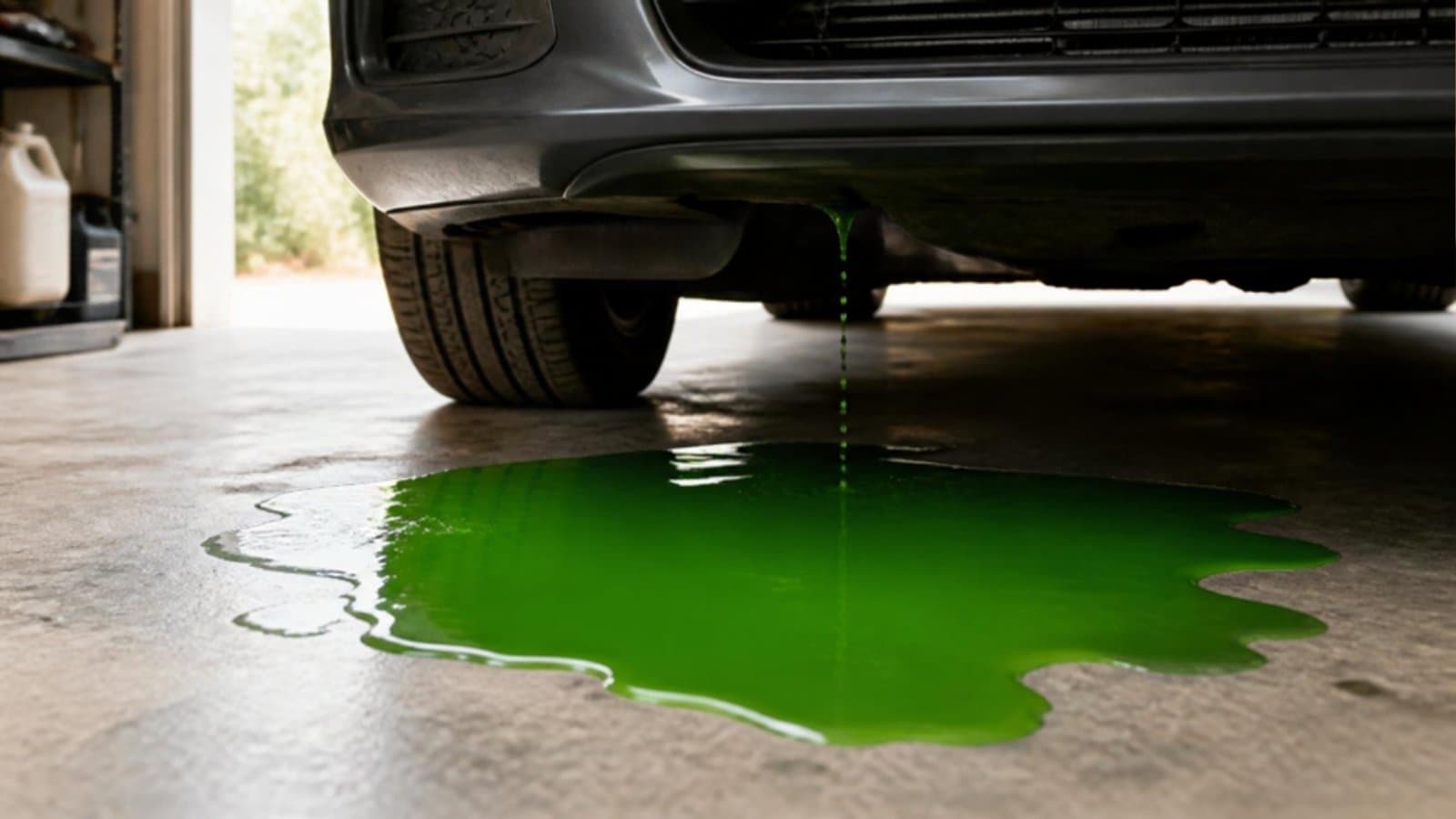
A car leaking coolant has a leak in a sealed system, because coolant does not get used up. The usual sources are a hose, the radiator, the water pump, the cap or the head gasket. A slow drip with a steady temperature gauge can be driven gently to a shop. A climbing gauge or steam means stop and tow.
You walk out to the driveway and there is a bright puddle under the front of your car. If your car is leaking coolant, the leak will not fix itself, and coolant is the fluid that keeps your engine from cooking on a summer climb and from freezing on a January night in the Yampa Valley.
This guide walks you through confirming that the fluid really is coolant, finding where it is coming from, deciding whether you can drive, and what a Craig winter changes about the answer. It is written by the team at Chapman's Automotive in Craig, CO, with each figure linked to the source it came from.
Key takeaways:
AAA states the cooling system is closed, so low coolant always means a leak.
Coolant is usually green, yellow, orange or pink, smells sweet and feels slimy; red and slick is more likely transmission or power steering fluid.
A rising temperature gauge or steam means pull over and shut the engine off; never open a hot radiator cap.
A 50/50 coolant mix is rated to about minus 34 degrees F, and Craig has recorded colder nights than that.
Most coolant contains ethylene glycol, which is poisonous to pets and children, so clean up puddles.
Table of Contents
Is that puddle actually coolant?
Probably, if it is brightly colored, a little slimy and smells sweet. AAA Club Alliance describes coolant as typically green, yellow or pink with a slimy texture and a slightly sweet smell, and AAA's overheating guide adds that it can also be orange, red, blue or violet. The color depends on the coolant type your vehicle uses, so color alone does not prove anything.
The easiest test: slide a sheet of white cardboard under the engine overnight, then check the color, feel and spot in the morning.
| What you see | Most likely fluid | How urgent |
|---|---|---|
| Green, yellow, orange or pink, slimy, sweet smell | Coolant (antifreeze) | Find the source soon; stop if the gauge climbs |
| Red, slick, little smell, middle or front of the car | Transmission fluid | Have it checked soon |
| Red, near the front, around the steering pump or hoses | Power steering fluid | Have it checked soon |
| Amber to brown or black, slick, hard to wipe off | Engine oil | Have it checked soon |
| Clear to light brown, near a wheel or the driver-side reservoir | Brake fluid | Do not drive; brakes depend on it |
| Clear, no smell, front passenger side, after AC use | Water from AC condensation | Normal |
The descriptions in the table come from AAA Club Alliance's leak guide, which also warns that transmission fluid can come in other colors. That is the trap with transmission fluid vs coolant: red coolant and red transmission fluid exist, so feel and smell decide it. Coolant is thin and slimy with a sweet smell; transmission fluid is slick and oily and has little smell. If the puddle turns out to be transmission fluid, that is a separate problem worth a separate check.
Why does a car leak coolant?
Because something in the sealed system has opened up. As AAA puts it, "The coolant system is closed, so if you have low coolant, you have a leak somewhere in the system." An engine does not burn or use up coolant the way it can use oil. If the level drops, it went somewhere, either onto the ground or inside the engine.
Hoses and clamps
Rubber radiator and heater hoses harden and crack with age and heat cycles, and clamps loosen. A hose leak often drips from a connection point and may only seep when the system is hot and under pressure. Cold snaps make old rubber stiffer, so a hose that sealed in September can weep in December.
The radiator and overflow tank
Yes, a radiator can leak. Radiators corrode, and plastic end tanks and overflow tanks crack. AAA lists a rusty radiator among the common causes of overheating. Look for crusty, colored residue on the radiator core or seams and on the bottom of the overflow tank.
The water pump
The water pump pushes coolant through the engine, and its internal seal eventually wears. A small weep hole on the pump is designed to drip when that seal starts to fail, so a drip from the front of the engine near the drive belt is a classic water pump sign. AAA notes that most water pumps last about 60,000 to 100,000 miles.
The radiator cap
The cap holds the system at pressure. A worn seal lets coolant push out to the overflow and onto the ground, and lowers the boiling point of the coolant. AAA names a cracked cap as an overheating cause. It is the cheapest part in the system and it is easy to overlook.
The heater core
Your cabin heat comes from engine coolant flowing through a small radiator behind the dashboard. When that heater core leaks, you may smell something sweet inside the car, see a greasy film fogging the windshield, or find a damp passenger floor. Because the heater and the cooling system share coolant, this one belongs to both our heating and AC repair team and the cooling system.
The head gasket
This is the serious one. The head gasket seals coolant passages between the engine block and cylinder head, and AAA explains that its job includes keeping coolant from leaking. When it fails, coolant can leak outside or disappear inside the engine. Signs include white, sweet-smelling exhaust smoke, coolant loss with no puddle at all, and repeated overheating. A failed head gasket is engine repair territory, which is why catching the cause early matters.
Coolant leaking but no puddle, or only a puddle when parked?
Both happen, and both point somewhere useful. A system under pressure can push coolant out as steam or vapor that never reaches the ground, and a small leak may only drip after you park, as the system cools and the pressure drops. A low reservoir with no puddle anywhere points toward an internal leak, such as a heater core or head gasket, rather than a hose.
Check these clues:
Puddle at the very front, under the radiator: radiator, lower hose or overflow tank
Drip near the front of the engine by the belts: water pump or a hose connection
Sweet smell or damp floor inside the car: heater core
Level dropping, no puddle, white exhaust smoke: head gasket or another internal leak
Coolant only after a long drive or climb: a seep that opens under heat and pressure
Write down what you see and when. That history shortens the diagnosis.
Can you drive with a coolant leak?
It depends on how fast the leak is and what your temperature gauge does. A slow seep with a full reservoir and a gauge sitting where it always sits can usually be driven gently to a shop. A leak that drains the reservoir, a gauge that climbs, or steam from under the hood means stop now. Many newer vehicles also have a low-coolant warning light or message on the dash; if it comes on, check the reservoir once the engine is cold and treat it the same as a dropping level, because the system is telling you coolant has gone somewhere.
The stakes are the engine. AAA says a normally running engine sits at about 195 to 220 degrees F, and warns that coolant leaking while the car runs will create steam. If the gauge climbs, AAA's advice is to pull over safely, turn the engine off to prevent further damage, and call for a tow, adding that topping off coolant yourself and continuing to drive is dangerous.
AAA's two guides draw the line in the same place. AAA Club Alliance tells you to check the overflow tank, but only once the vehicle has cooled. AAA's overheating guide applies once the engine is already hot: tow it. The practical line is your gauge. Topping off a cold engine to get a slow seep to the shop is reasonable; topping off an overheated engine and driving on is not.
If you do check the level:
Wait until the engine is fully cool. AAA Club Alliance warns not to open the radiator cap until the vehicle has cooled; hot coolant is under pressure and can scald you.
Check the see-through overflow tank against its cold fill line first.
Use the coolant type your owner's manual specifies, not whatever color is on the shelf.
Check your owner's manual before pouring in any stop-leak or sealer product, and tell your shop if you have used one.
What changes about a coolant leak in a Craig winter?
The freeze side of the job. Coolant does two things: it carries heat away from the engine, and it keeps the water in the system from freezing and cracking the engine block or radiator. A leak makes both worse, and so does the common fix of topping off with plain water.
The numbers make the case. Prestone's safety data sheet for its 50/50 prediluted coolant lists a freezing point of minus 34 degrees F. Plain water freezes at 32 degrees F, so every time a leak gets topped off with water, freeze protection drops. Craig's weather is the reason to care: the Western Regional Climate Center's Craig 4 SW station averaged a January low of 6.5 degrees F from 1977 to 2016, and the station's daily records include minus 41 degrees F on February 6, 1989. A diluted mix can freeze on nights Craig actually gets.
Two more winter points:
Your heater runs on coolant. Low coolant can mean weak heat and a slow defrost on a frosty morning on US-40, which is a visibility problem, not just a comfort one.
Old hoses and seals shrink and stiffen in the cold, so a leak you could ignore in August can speed up in January.
If your coolant has been topped off with water, have its strength tested before the first hard freeze. It is one of the checks in our winterization service.
Why should you clean up leaked coolant right away?
Because most coolant is poisonous. Prestone's safety data sheet lists ethylene glycol as a main ingredient and states the product is harmful or fatal if swallowed. Purdue University's College of Veterinary Medicine warns that it tastes sweet, that kids can be drawn to it, and that even a little licked off a cat's fur could harm the cat.
Soak up puddles with cat litter or rags, then rinse the spot.
Keep pets and children away from the driveway until it is clean.
Store and dispose of old coolant in a sealed, labeled container, never an open pan.
How is a coolant leak found and fixed?
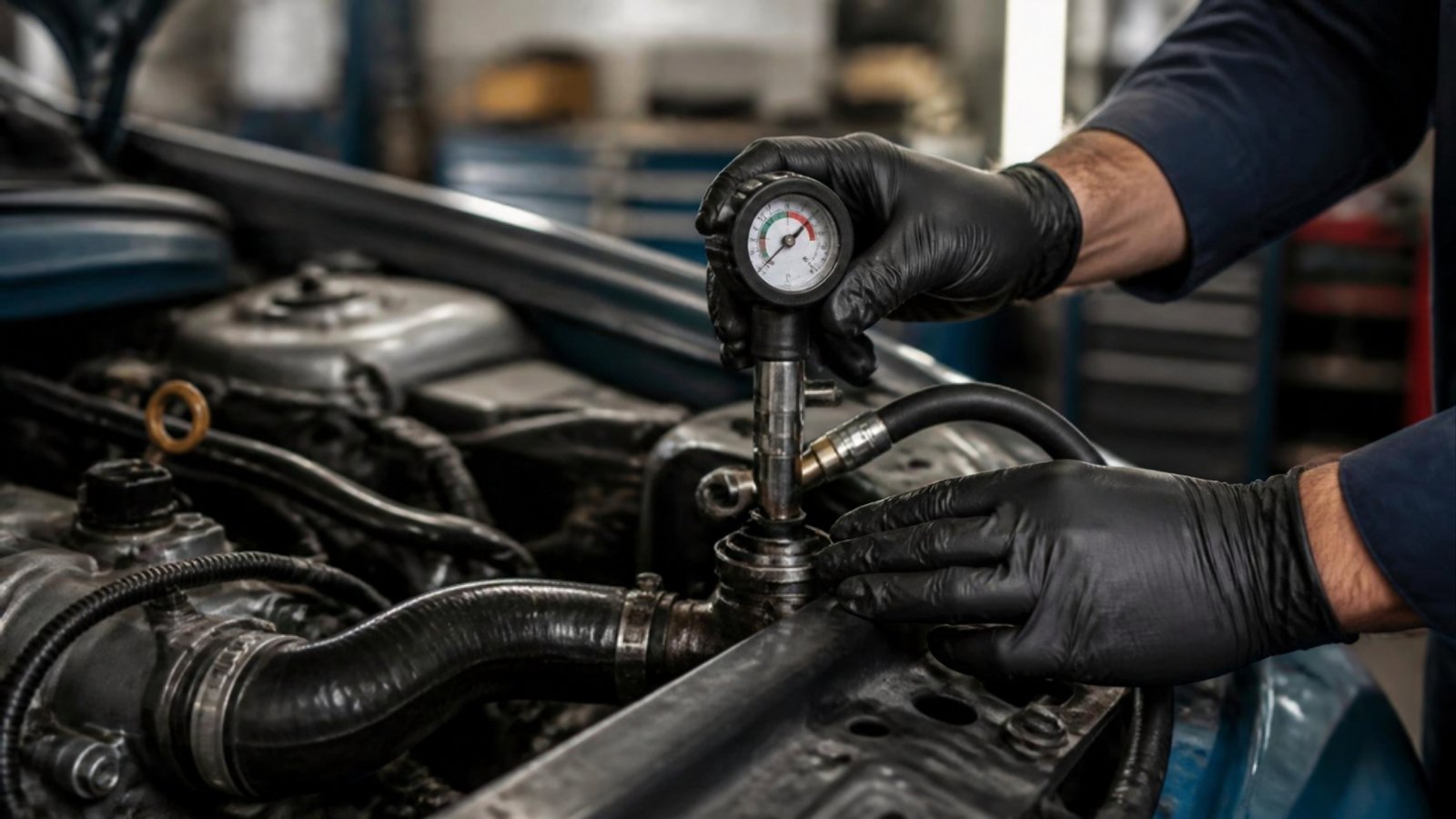
By testing, not guessing. A shop pressurizes the cooling system with the engine cool to make a slow leak show itself, inspects hoses, clamps, the radiator, the water pump and the cap, and checks for signs of an internal leak if no outside drip turns up. The repair depends entirely on the source: a clamp and a hose are a different job from a water pump or a head gasket.
Our cooling system repair page covers what that service includes, from pressure testing and coolant strength checks to radiator, water pump and thermostat repair.
Get the leak found before it finds your engine
If you have found a bright puddle, a dropping reservoir or a sweet smell, start with a free digital inspection with photos, so you can see the leak yourself. You get a written estimate before any work begins, qualifying repairs carry a 5-year / 50,000-mile warranty, and free loaner cars and shuttle service keep you moving while the work is done. Book online through our appointments page, or call Chapman's Automotive at 970-550-2883.
Sources
Prestone: Safety Data Sheet SDS508, 50/50 Prediluted Antifreeze/Coolant
Western Regional Climate Center: Craig 4 SW, CO monthly climate summary
Western Regional Climate Center: Craig 4 SW, CO daily records
Purdue University: Antifreeze is poisonous to pets and humans
FAQ
Can coolant leak without leaving a puddle?
Yes. Coolant can escape as steam while the engine is hot, or leak internally through a heater core or head gasket. A reservoir that keeps dropping with a dry driveway is a reason to get it checked promptly.
Can a radiator leak?
Yes. Radiators corrode with age, and the plastic end tanks and overflow tanks can crack. Look for colored, crusty residue on the radiator core or seams.
How do I tell transmission fluid vs coolant?
Feel and smell. Coolant is thin, slimy and smells sweet; transmission fluid is usually red, slick and oily with little smell. Because some coolants are red too, the white-cardboard test plus a look at both reservoir levels settles it.
Is it okay to top off coolant with water?
Only as a short emergency measure to reach a shop. Water freezes at 32 degrees F, while a 50/50 coolant mix is rated to minus 34 degrees F, so water dilutes your freeze protection. Have the mix tested before winter.
Why does my car smell sweet but I see no leak?
A sweet smell is the classic sign of coolant. It may be dripping onto a hot engine part and burning off, or leaking from the heater core inside the dash. Either way, have it checked before the level drops far enough to overheat the engine.
Questions about your vehicle?
Chapman's Automotive is in Craig, CO — serving the Yampa Valley. Call 970-550-2883 or book online and we'll take a look.