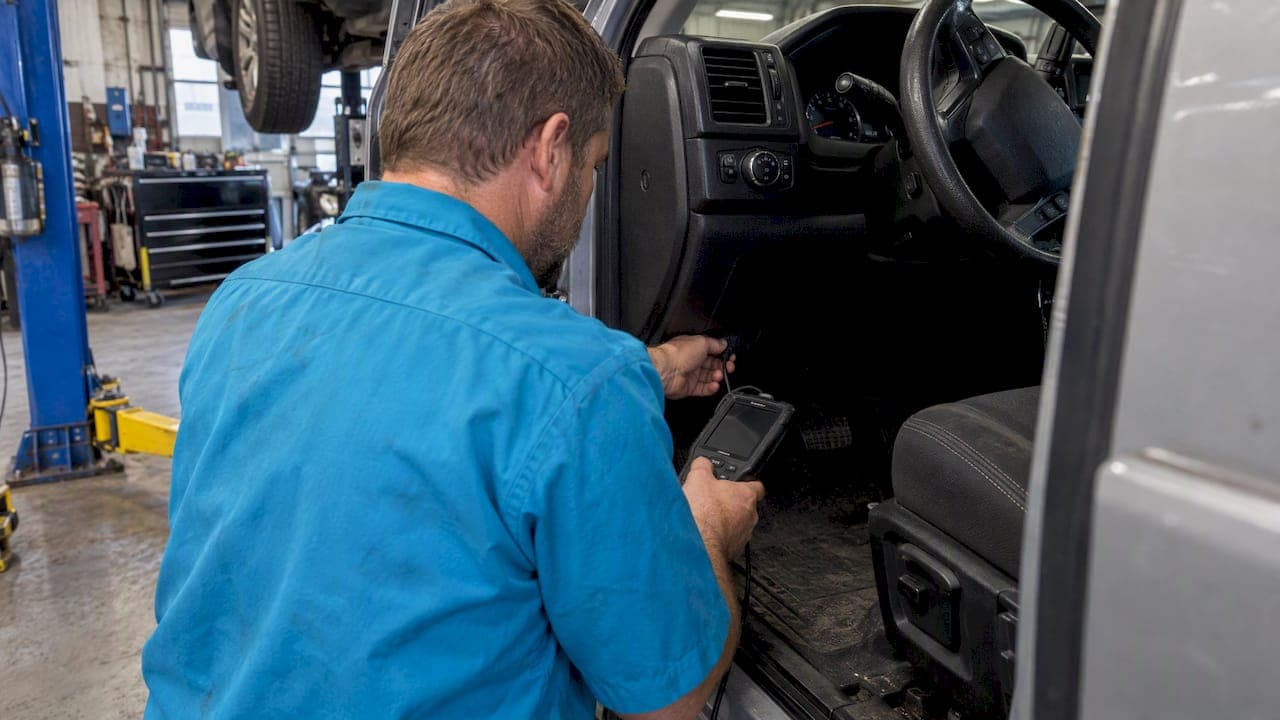
A check engine light diagnosis typically costs between the low to mid-hundreds in labor, depending on your vehicle and where you take it. Before anything else, check whether the light is flashing or steady. A flashing light means stop driving and have the car looked at right away, while a steady light means you should schedule an inspection soon. A quick code pull isn’t the same as a full diagnosis, and the difference matters for your wallet and your safety.
TL;DR:
- The typical diagnostic cost ranges from $100 to $150, but it can vary based on vehicle make, model, and local labor rates.
- A proper diagnosis involves multiple steps beyond a code pull, including live data verification and component testing, which add to the overall time and expense.
- Intermittent problems or complex vehicles like hybrids may push diagnostic fees higher, especially if additional tests or time are required.
- Common repairs after diagnosis often fall into low hundreds of dollars for simple fixes, while major engine or transmission repairs can cost thousands.
- A flashing check engine light requires immediate inspection and cannot be safely ignored, whereas a steady light permits scheduled diagnosis.
Table of Contents
- What a Check Engine Diagnostic Actually Costs
- How a Technician Actually Diagnoses the Problem
- Why Your Price Might Land High or Low in the Range
- How Long a Diagnostic and Repair Actually Take
- What Repairs Usually Follow a Diagnosis, and What They Cost
- When to Keep Driving and When to Pull Over
- How to Get a Quote You Can Actually Trust
- Why Craig and Yampa Valley Drivers Choose Chapman’s for Diagnostics
- Fees Beyond the Initial Diagnosis You Should Know About
- Does Insurance Cover a Check Engine Light Repair?
- A Local Mechanic’s Take on Budgeting for This
- Get Your Check Engine Light Looked at Today
- Where These Numbers Come From
- Sources
- FAQ
What a Check Engine Diagnostic Actually Costs
Most shops charge between $100 and $150 for a check engine diagnostic, and that figure lines up with real vehicle examples. RepairPal’s general diagnosis cost estimator shows that labor costs shift based on the make and model you drive, which is why a national average only gets you so far.
A 2026 Honda Civic typically runs diagnostic labor costs in a midrange price band, while a 2026 Volkswagen GTI runs somewhat higher, according to RepairPal’s vehicle-specific estimates. The gap comes down to parts access, sensor layout, and how much labor time the job takes.
That price usually covers:
- The initial scan and code retrieval.
- Technician time to verify the cause with live data or component tests.
- A written summary of what’s wrong and what it will take to fix it.
What it doesn’t cover: parts, the labor to install them, or taxes. Treat any online range as a starting point. Your local cost guide or a shop quote based on your actual VIN will always be more accurate than a national number.
How a Technician Actually Diagnoses the Problem
A scan tool pull is step one, not the answer. The EPA’s OBD documentation explains that onboard diagnostic systems monitor your emissions-related components and trigger the check engine light, known as the malfunction indicator lamp, when something falls outside normal range. The code that comes up points to a symptom, not necessarily the failed part.
That’s why a proper diagnosis involves more steps:
- Pull the stored code and freeze-frame data from the OBD-II system.
- Compare live sensor data against expected values.
- Run targeted tests on the suspect component, such as voltage or resistance checks.
- Perform a smoke or leak test if the code points to the fuel or emissions system.
- Take the vehicle on a road test to confirm the issue shows up under real conditions.
Each added step takes technician time, which is where cost can climb past the base fee. Our diagnostic service page walks through what this looks like in practice.
Pro Tip: Ask upfront whether the quoted price includes verification testing or just the code pull. A $19 code read at a parts store isn’t a diagnosis.
Why Your Price Might Land High or Low in the Range
Several factors push your final number up or down within that typical range.
- Vehicle complexity: European and performance models often require more labor time to access components than a mainstream sedan.
- Shop labor rate: Diagnostic pricing is usually built on an hourly rate, so a shop’s posted rate directly affects your total.
- Intermittent problems: A code that only shows up occasionally can take longer to reproduce and confirm, adding time to the job.
- Location: Rural Colorado shops sometimes face longer waits on specialty parts, which can stretch out a repair timeline even when the diagnosis itself is quick. Our auto repair cost guide breaks down how local labor rates compare.
Hybrid and electric vehicles add another layer, since their diagnostic systems monitor additional high-voltage components that a standard gas engine doesn’t have.
How Long a Diagnostic and Repair Actually Take
A standard scan and verification usually takes 30 to 120 minutes, depending on how straightforward the code is. A single stored code with a clear cause, like a loose gas cap, can be confirmed quickly. An intermittent electrical issue takes longer because the technician has to recreate the conditions that trigger it.
Same-day diagnosis and repair is realistic for common fixes: a bad oxygen sensor, a failed ignition coil, or a loose gas cap can often be diagnosed and fixed in one visit. If the fix requires a special-order part, expect a wait of a few days, especially in rural parts of the Yampa Valley. Ask your shop about a loaner car or shuttle service so the wait doesn’t leave you stranded.
What Repairs Usually Follow a Diagnosis, and What They Cost
The diagnostic fee is just the starting point. What you pay next depends on what the technician finds.
- Low-cost fixes: A loose or damaged gas cap or a simple sensor replacement often runs well under $100 in parts.
- Mid-range repairs: Oxygen sensors, ignition coils, and mass airflow sensors typically land in the low hundreds once parts and labor are combined.
- High-cost repairs: Catalytic converter replacement or significant engine and transmission work can run into the thousands, since these jobs involve more parts, more labor hours, and sometimes emissions compliance requirements.
The gap between a Civic’s $122 to $179 diagnostic range and a GTI’s $159 to $233 range shows how much vehicle type alone affects your bill, according to RepairPal’s vehicle estimators. The same spread applies to repair costs once you factor in parts availability and labor complexity. If a diagnosis points to major engine work, our engine repair page outlines what that scope of work involves.
When to Keep Driving and When to Pull Over
The light’s behavior tells you how urgent the problem is. AAA’s guidance on check engine lights is clear on this point: a flashing light means a serious misfire that can damage your catalytic converter, so pull over and get the vehicle towed or inspected immediately. A steady light means you should schedule an inspection soon, but you can typically still drive short distances.

Stop immediately, regardless of the light’s pattern, if you notice a loss of power, visible smoke, a burning smell, or unusual shaking. In Colorado, an illuminated check engine light will also cause an automatic failure on your emissions test, so getting it addressed matters beyond safety.
How to Get a Quote You Can Actually Trust
A vague phone call gets you a vague estimate. Come prepared and you’ll get a number that holds up.
- Have your VIN ready so the shop can pull exact specs for your vehicle.
- Describe the symptoms in detail: when the light came on, any noises, and driving conditions.
- Mention recent service or repair work, since that context can narrow down the cause.
Once you’re talking to the shop, ask what the diagnostic fee includes, what the hourly labor rate is, and whether that diagnostic fee gets credited toward the repair if you move forward.
Pro Tip: Ask which verification tests are included before parts are ordered. A shop that confirms the fix before swapping parts saves you from paying for a part you didn’t need.
Why Craig and Yampa Valley Drivers Choose Chapman’s for Diagnostics
A local auto shop in Craig has been diagnosing and repairing vehicles since 1985, now operated by multiple generations of the founding family. Every visit includes a digital inspection with photos, so you see what the technician found. Diagnostics and many repairs can happen the same day, loaner cars may be available if parts are needed, and some repairs carry an extended warranty. Technicians at this shop answer the phone directly.
Fees Beyond the Initial Diagnosis You Should Know About
The base diagnostic fee doesn’t always cover everything you’ll see on the final bill. A few additional charges are common across the industry, and knowing about them ahead of time keeps you from being surprised.
Re-scan fees can come up if a shop clears a code, has you drive the car for a period of time, then brings it back in to confirm the fix worked. Some shops fold this into the original fee; others charge separately for the follow-up visit. Ask about this upfront rather than after the fact.
Extended technician time is another variable. If a code turns out to be intermittent or the root cause takes longer to isolate than a standard diagnostic window, some shops bill for the extra hours at their hourly labor rate. This is more common with electrical gremlins than with straightforward sensor failures.
A written estimate before any work begins is the best protection against surprise charges. Ask specifically whether the diagnostic fee is a flat rate or whether it’s billed hourly with a cap, and whether that fee applies toward the repair cost if you move forward with the same shop. Shops that build their pricing around transparency, rather than hourly billing with no ceiling, tend to give you a number you can actually plan around.

Does Insurance Cover a Check Engine Light Repair?
Standard auto insurance, whether liability or full coverage, generally does not cover check engine light diagnosis or the repairs that follow. These are mechanical issues tied to wear and component failure, not the kind of sudden, accident-related damage that a collision or comprehensive policy is built to handle.
There are a few exceptions worth checking. If your check engine light came on immediately after an accident, a flood, or another covered event, your comprehensive or collision coverage might apply, so it’s worth mentioning the timing to your insurer. Extended vehicle service contracts or manufacturer warranties are a separate matter entirely and often do cover diagnostic fees and parts if the failure falls within their terms.
Before authorizing repair work, check whether your vehicle is still under a manufacturer warranty or an extended service contract. Diagnostic and repair costs for a covered component might be fully or partially reimbursed, and a shop can usually tell you during the estimate process whether a specific repair looks like a warranty claim worth pursuing with your dealer or provider.
A Local Mechanic’s Take on Budgeting for This
Safety comes first: a flashing light means stop now, not after your errands. Get a VIN-specific quote rather than trusting a national average, and check your warranty before authorizing costly repairs. If you need your car back fast, ask about same-day diagnostics.
— J.B. Chapman
Get Your Check Engine Light Looked at Today
A same-day diagnostic means you’re not losing a week of driving while you wait for an appointment slot. Chapman’s Automotive backs every diagnosis with a free digital inspection complete with photos, so you can see what the technician saw instead of taking our word for it. If parts are needed, a free loaner car keeps you moving, and every repair carries a five-year, 50,000-mile warranty.

Visit our check engine diagnostics page to see what’s included, or call the shop in Craig to get a VIN-specific quote before you commit to anything.
Where These Numbers Come From
These ranges come from RepairPal’s diagnostic estimator, AAA’s check engine light guidance, and the EPA’s technical OBD documentation. For your exact vehicle, plug your make and model into RepairPal’s vehicle-specific pages for a closer estimate.
Sources
- RepairPal estimator — general diagnosis cost
- AAA: The Check Engine Light: Common causes and how to fix it
- EPA — On-Board Diagnostic (OBD) regulations and requirements (Q&A)
FAQ
Can I drive four hours with a check engine light on?
It depends on whether the light is flashing or steady. A steady light generally means it’s safe to drive for a while, but a flashing light signals a serious misfire, and AAA recommends getting the vehicle inspected right away rather than continuing a long drive.
Can I pass a Colorado emissions test with the check engine light on?
No. An illuminated check engine light causes an automatic failure on Colorado’s emissions inspection, regardless of what the underlying issue turns out to be. You’ll need to get the light diagnosed and resolved before retesting.
What’s the most common cause of a check engine light?
Causes vary widely, but a loose or damaged gas cap, a failing oxygen sensor, and worn ignition coils are among the most frequently diagnosed triggers. The only way to know for certain is a scan followed by verification testing, since the stored code points to a symptom rather than the exact failed part.
Does AutoZone charge to diagnose a check engine light?
Auto parts stores commonly offer free code reads, but that’s not the same as a full diagnosis. A code pull tells you which system triggered the light, while a technician’s diagnosis, typically running $100 to $150 for labor, verifies the actual cause through testing before any repair is recommended.
Recommended
Questions about your vehicle?
Chapman's Automotive is in Craig, CO — serving the Yampa Valley. Call 970-550-2883 or book online and we'll take a look.