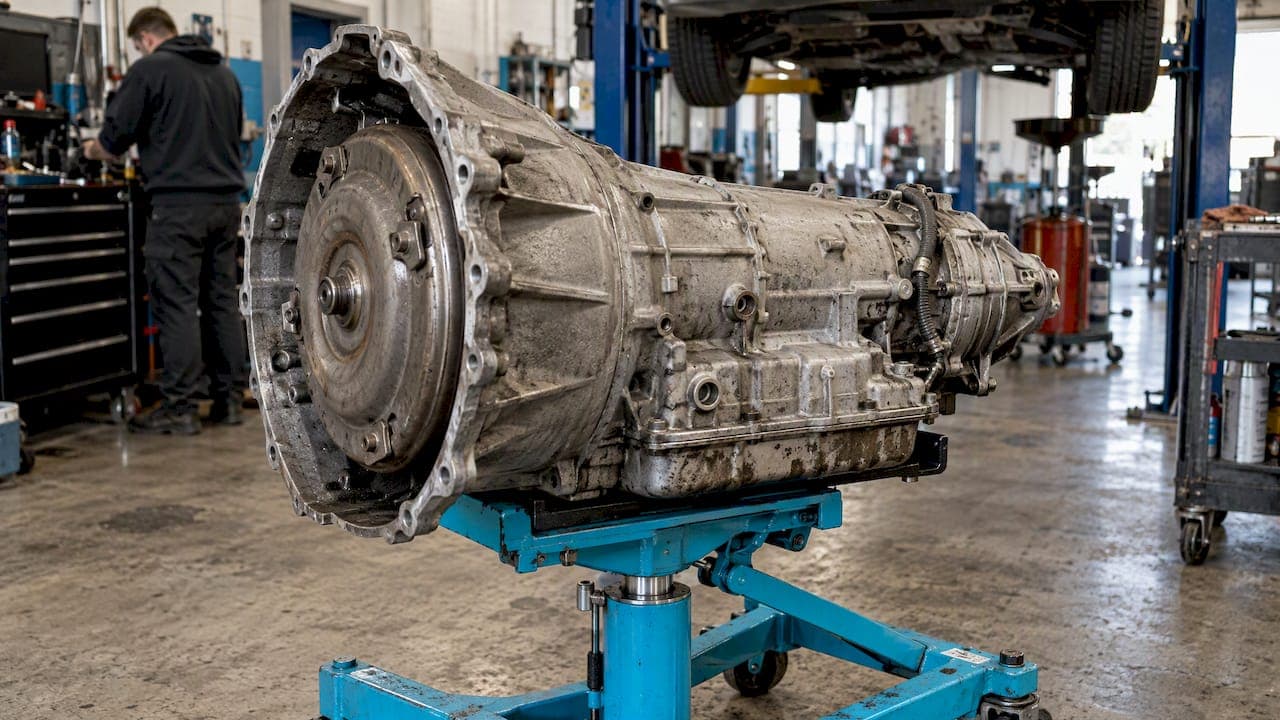
Rebuilt vs. Remanufactured Transmission: What’s the Difference?

A rebuilt transmission is repaired by a technician, who replaces the parts that failed or wore out and reuses the parts that are still in good shape. A remanufactured transmission goes through a factory-style process, where the unit is brought back to set specifications and then tested on specialized equipment. Both can be good choices. The right one depends on your vehicle, the exact failure, your budget and how soon you need the truck or car back on the road.
This guide explains what each word means, how both compare with used and “new” units, what to ask a shop before you approve the work, and when you may not need either one.
TL;DR
- Rebuilt: the original transmission is taken out, disassembled, inspected and repaired, then reassembled to factory specifications. Quality depends heavily on the shop and the parts used.
- Remanufactured: a similar process done in a factory setting, with the finished unit tested on specialized equipment. It is more standardized, and it usually carries a longer warranty.
- Used: pulled from another vehicle, usually cheaper, usually with a shorter warranty and the most unknowns.
- “New”: brand-new transmissions are rarely sold through dealers or aftermarket sources. Many units sold as new are remanufactured.
- Before you decide: get the diagnosis in writing, ask what the warranty covers (parts, labor or both), and rule out a fluid or sensor problem first.
Table of Contents
- What a rebuilt transmission is
- What a remanufactured transmission is
- Rebuilt vs. remanufactured at a glance
- Rebuilt vs. used
- Remanufactured vs. new
- Warranty: the number that matters most
- What it costs
- Before you buy any of these: is the transmission really bad?
- How to choose: a simple decision guide
- Questions to ask any shop
- Our perspective
- Transmission help in Craig and the Yampa Valley
- FAQ
- Sources
What a rebuilt transmission is
According to the Automatic Transmission Rebuilders Association (ATRA), a rebuild means the transmission is removed from the vehicle, fully disassembled and inspected. Worn or damaged hard parts and soft parts are replaced, and the unit is reassembled to factory specifications.
Hard parts are things like gears, drums and the case. Soft parts are seals, gaskets, clutches and friction material. A good rebuild replaces every soft part and any hard part that is out of tolerance.
The important detail is that a rebuild is a judgment call made one transmission at a time. A manufacturer FAQ on remanufactured units points out that rebuilding typically replaces broken or severely worn parts and reuses serviceable parts within acceptable wear limits. That is why rebuild quality can vary a lot. Two shops can both say “rebuilt” and deliver very different transmissions.
What makes a rebuild good
- The technician measures parts instead of just eyeballing them.
- Every clutch, seal and gasket is replaced, not just the ones that look bad.
- The torque converter is replaced or properly cleaned and tested.
- The cooler and lines are flushed or replaced, so debris from the old unit does not wreck the new work.
- The shop explains in writing what was replaced and what was reused.
What a remanufactured transmission is
ATRA describes a remanufactured transmission as similar to a rebuilt one, but done in a factory setting, with the finished unit tested on specialized equipment such as a dynamometer.
The manufacturer FAQ says remanufacturing brings the case, housing, pump, valve body, converter and internal components to measured original-equipment specifications. Replacement parts are new or requalified, and testing follows manufacturer and original-production standards. In other words, the process is repeatable, and each unit gets the same treatment.

The tradeoff is that you get a standardized unit. A small, careful shop can sometimes build something better matched to a specific vehicle or a specific known weakness. A factory process gives you consistency and, usually, a stronger paper warranty.
Rebuilt vs. remanufactured at a glance
| Rebuilt | Remanufactured | |
|---|---|---|
| Where the work happens | In a repair shop, by the technician who may install it | In a factory-style facility |
| Process | Disassembled, inspected, worn or failed parts replaced | Brought to measured specifications with new or requalified parts |
| Testing | Depends on the shop | Tested on specialized equipment |
| Consistency | Varies by shop and technician | Standardized |
| Warranty | Set by the shop, and can range widely | Often set nationwide by the manufacturer |
| Best fit | Specific failures, older or less common vehicles, local accountability | Newer vehicles, known problem designs, buyers who want a standard warranty |
Both can be dependable. ATRA notes that its member shops follow minimum standards for rebuilt transmissions that qualify for its Golden Rule Warranty, which helps keep quality consistent. A shop’s name and its warranty tell you more than the word on the invoice.
Rebuilt vs. used
A used transmission is the cheapest way to get a vehicle moving again, and sometimes that is the right call on an older vehicle with low value.
ATRA says used transmissions can be significantly less expensive than rebuilt ones but typically have shorter warranties. The manufacturer FAQ describes a used unit as generally pulled from a junkyard vehicle without disassembly, internal cleaning or inspection. You are betting on the donor vehicle’s mileage, maintenance history and whether it was in a wreck.
AAA adds that recycled-part warranties tend to be shorter and generally do not cover replacement labor. That matters because labor on a transmission swap is a big part of the bill. If the used unit fails in six months, you may pay for the same labor twice.
A used transmission makes sense when:
- the vehicle is worth less than a rebuild would cost,
- you plan to sell or trade it soon,
- you can verify the donor mileage and condition, and
- the warranty covers labor, not just the part.
A rebuilt or remanufactured unit makes more sense when you plan to keep the vehicle, tow with it or depend on it for winter driving.
Remanufactured vs. new
Most people assume the alternative to a rebuild is a brand-new transmission. Usually it is not. ATRA says brand-new transmissions are not typically available through dealerships or aftermarket sources, and what dealerships sell as “new” transmissions are remanufactured units.
So when a quote says “new,” ask exactly what is in the box. Is it a remanufactured unit? Who built it? What is the warranty, and who pays the labor if it fails?
Industry reporting gives a sense of how far remanufacturing has come. Transmission Digest reported that one major transmission maker describes its industrialized remanufacturing as delivering performance like new, with a similar warranty, at about 30% lower cost. The same article says that company can reuse 60% to 90% of materials in its remanufactured products. Those are one manufacturer’s claims, so treat them as a guide to the process, not a promise about every unit.
Warranty: the number that matters most
The name on the invoice matters less than the terms behind it. Read these before you sign:
- Length: months and miles, whichever comes first.
- Parts only, or parts and labor: a parts-only warranty can leave you paying hundreds or more in labor if the unit fails.
- Where it is honored: a nationwide warranty matters if you travel. Northwest Colorado drivers cross mountain passes and state lines all the time.
- Conditions: some warranties require a new cooler, a flush or documented service.
- Who answers the phone: the shop that installed it, or a call center.
For reference, the manufacturer FAQ states that most of its remanufactured automotive transmissions carry a 3-year/100,000-mile nationwide parts-and-labor warranty, with shorter terms for commercial or special-use vehicles. AAA says replacement-part warranties range from 90 days/3,000 miles to lifetime for the original purchaser, and that new and rebuilt parts installed by a dealer or independent facility typically carry at least 12 months/12,000 miles.
That range is wide. Two quotes with similar prices can have very different protection.
At Chapman’s, repairs carry a five-year, 50,000-mile warranty. Ask us for the specifics on any transmission job when we write the estimate.
What it costs
Transmission work is one of the larger repair bills most drivers face, and the price swings with vehicle, transmission type, parts source and labor. AAA says rebuilt parts can save 20% to 50% on auto-repair costs compared with new, which is the general reason rebuilt and remanufactured units exist.
We do not publish a flat transmission price, and for good reason: a 6-speed automatic in a diesel pickup and a CVT in a compact SUV are different jobs. A real quote should list:
- the unit itself (and whether it is rebuilt, remanufactured or used),
- labor to remove and install,
- the torque converter,
- fluid and filter,
- cooler flush or replacement,
- any related parts found during inspection, such as mounts, sensors or lines, and
- the warranty terms.
If a quote is one line with one number, ask for the breakdown. Our approach is a written estimate with photos from the digital inspection, so you can see what we saw before you approve anything.
Before you buy any of these: is the transmission really bad?
Many “transmission problems” are not transmission failures. Slipping, hard shifts or a delayed engagement can come from:
- low or burned fluid,
- a clogged filter,
- a failing sensor or solenoid,
- a software or calibration issue,
- a wiring problem, or
- engine misfires that feel like shifting trouble.
The right order is diagnose first, then decide. We wrote a full walkthrough in diagnosing transmission slipping before approving a rebuild. If you have a check engine light on as well, our check engine and diagnostics service is the place to start.
A fluid service or a repair of one component costs a fraction of any rebuild or replacement. A shop that jumps straight to a rebuild without scanning codes, checking fluid condition and road testing is a shop to question.
How to choose: a simple decision guide
| Your situation | What usually fits |
|---|---|
| Daily driver you plan to keep for years | Rebuilt by a shop with a strong written warranty, or remanufactured |
| Tow rig, work truck or fleet vehicle | Remanufactured or a carefully built rebuild with a parts-and-labor warranty |
| Older vehicle worth less than the repair | Used unit, with eyes open on the risk |
| Common failure on a known weak design | Remanufactured units that include updates for that weakness, or a rebuild that addresses it |
| Rare or older model with limited availability | Rebuild |
| Only one component failed | Repair that component, if diagnosis supports it |
ATRA’s view is that there is no universally best transmission option: budget, quality expectations, urgency, vehicle characteristics and the exact failure should drive the decision. We agree with that. Be wary of any shop or website that says one choice is always right.
Questions to ask any shop
- What exactly failed, and can you show me?
- Is this unit rebuilt, remanufactured or used? Who built it?
- Is the warranty parts only, or parts and labor? Where is it honored?
- What gets replaced: converter, cooler, filter, seals?
- How long will the vehicle be down?
- Will you give me the quote in writing, with every line item?
- Is a loaner or ride available while the work is done?
A shop that answers these plainly is a good sign.
Our perspective
We have worked on vehicles in the Yampa Valley since 1985, and we have seen every version of this decision. Here is how we look at it.
Most people who come to us worried about a transmission do not need a rebuild right away. They need a proper diagnosis. We start with a free digital inspection with photos, scan for codes, check the fluid and road test the vehicle. Sometimes the answer is a fluid service, a sensor or a solenoid. When it is a real internal failure, we lay out the choices in writing and tell you which we would pick for your vehicle and why.
Our view is that the paperwork matters as much as the parts. A rebuilt unit from a careful shop with a real warranty beats a vaguely described “new” one. A remanufactured unit with a clear nationwide warranty beats a rebuild from a shop you cannot reach. Pick the option with the clearest terms, the most honest explanation and a shop you can drive back to.
We work on all makes and models, gas and diesel, from Cummins, Power Stroke and Duramax pickups to Subarus, Toyotas and European cars. We do not want you to pay for a bigger repair than you need, and we do not want you to find out after the fact that a cheap unit came with a short warranty.
— J.B. Chapman
Transmission help in Craig and the Yampa Valley
If your transmission is slipping, shifting hard or leaking, bring it to our shop at 310 E Victory Way in Craig. Every visit includes a free digital inspection with photos, and free loaner cars and a shuttle are available so you are not stuck while we work. See our transmission repair page or our full list of services to get started. If you are in Steamboat Springs and got a high quote elsewhere, we are happy to look at the same vehicle and give you a written second opinion.
For related drivetrain issues, such as differentials and transfer cases, see drivetrain and differential repair. Diesel owners can also read about our Cummins, Power Stroke and Duramax service.
FAQ
Is a remanufactured transmission better than a rebuilt one?
Not always. Remanufactured units are built in a factory process with standardized testing and often a longer, nationwide warranty. A rebuild by a skilled shop can be just as good, and sometimes better matched to a specific vehicle. Judge each by the warranty terms and the reputation of whoever built it.
Is a rebuilt transmission better than a used one?
Usually, yes, if you plan to keep the vehicle. A rebuilt unit has been taken apart and inspected, while a used unit generally has not. Used units cost less but typically carry shorter warranties, and those often do not cover labor.
Is a remanufactured transmission the same as a new one?
No, but the difference is smaller than people think. Brand-new transmissions are rarely sold through dealerships or aftermarket sources, and units sold as new are often remanufactured. Ask what you are getting and what the warranty covers.
Can any transmission be rebuilt?
Most automatic transmissions can be. Whether it makes sense depends on the vehicle, the mileage, the type of transmission and the failure. Have the transmission diagnosed first, because the problem may be something much smaller than a full rebuild.
Sources
- Transmission Repair Options, Automatic Transmission Rebuilders Association
- Remanufactured Transmission FAQs
- Selecting Automobile Replacement Parts, AAA Automotive
- Reman transmissions in 2024: Two perspectives, Transmission Digest
Recommended
Questions about your vehicle?
Chapman's Automotive is in Craig, CO — serving the Yampa Valley. Call 970-550-2883 or book online and we'll take a look.