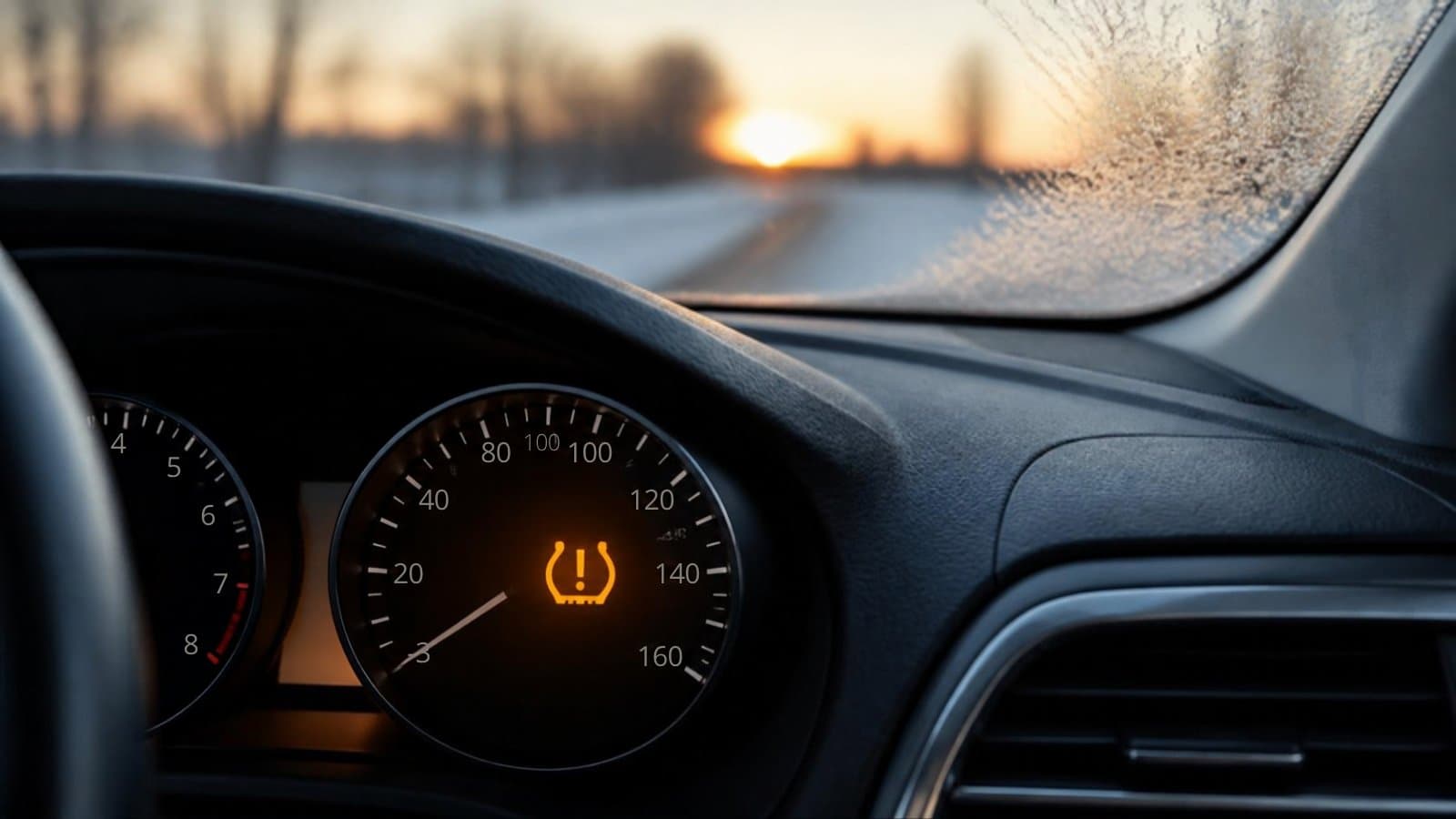
A solid TPMS light means at least one tire has dropped well below the pressure on your door placard, often after a cold night. A light that flashes for about a minute at startup and then stays on means the monitoring system itself has a fault, usually a dead sensor battery, a damaged sensor or wheels without sensors.
The first hard freeze in Craig tends to light up a lot of dashboards at once. If your TPMS light is flashing or glowing steady on a cold morning, the pattern of the light tells you most of what you need to know: one pattern means your tires need air, the other means the warning system itself needs attention.
This guide explains the difference between a solid and a flashing TPMS light, why tire pressure drops when the temperature does, how to check and fill your tires correctly, and when a sensor needs replacing. The team at Chapman's Automotive in Craig put it together so you can sort out the simple fix from the one that needs a shop.
Key takeaways:
Federal rules require the low-pressure light when a tire is 25 percent or more below the manufacturer's recommended cold pressure.
A flashing-then-solid light is the system's malfunction signal: it flashes 60 to 90 seconds, then stays lit.
Tire pressure falls 1 to 2 psi for every 10 degree Fahrenheit drop in temperature, according to USTMA.
Set pressure to the door placard, checked cold, not the maximum printed on the tire sidewall.
A flashing light means the system cannot warn you, so check your tires with a gauge until it is fixed.
Table of Contents
Why does my TPMS light flash after switching to winter tires?
Get your tires and sensors checked before the next cold snap
What does the TPMS light mean?
The TPMS light is your tire pressure monitoring system's warning. It is the yellow symbol shaped like a tire cross-section with an exclamation point in the middle, and it has two jobs: warning you about low pressure and warning you when the system is not working.
Under the federal TPMS standard, FMVSS No. 138, the low-pressure light must come on within 20 minutes once any tire falls 25 percent or more below the vehicle manufacturer's recommended cold inflation pressure. It must stay on as long as the pressure stays that low. The standard covers passenger cars, SUVs, pickups and vans with a gross vehicle weight rating of 10,000 pounds or less, except those with dual wheels on an axle.
That 25 percent threshold matters. If your placard says 35 psi, for example, the light may not come on until a tire is near 26 psi. By the time the light is on, the tire is not a little low. It is well below where it should be.
The system works. In a 2012 NHTSA evaluation, 23.1 percent of model year 2004 to 2007 vehicles without TPMS had at least one severely underinflated tire, against 11.8 percent of vehicles with TPMS. NHTSA estimated TPMS cut the likelihood of a severely underinflated tire by 55.6 percent.
TPMS light flashing vs solid: what is the difference?
A solid light means low pressure. A light that flashes and then stays on means a system malfunction. That is the single most useful thing to know about this warning.
FMVSS No. 138 spells out the malfunction signal: on vehicles that use one light for both warnings, the light flashes for at least 60 seconds and no longer than 90 seconds, then stays continuously lit for as long as the fault exists. It repeats that pattern every time you start the vehicle.
| What you see | What it means | What to do |
|---|---|---|
| Solid light, stays on | One or more tires is 25 percent or more under the placard pressure | Check all four tires with a gauge and fill to the placard |
| Solid light on cold mornings, off after driving | Pressure is hovering right at the warning threshold | Add air to the placard number, checked cold |
| Flashes 60 to 90 seconds, then stays on | The system has a fault and cannot monitor pressure | Check pressures by gauge, then have the system diagnosed |
| Light comes on while driving and a tire looks low | Likely a puncture or fast leak | Slow down, pull over safely, inspect the tire |
Some vehicles also show a separate "TPMS" text light or a message in the instrument cluster for a system fault. Your owner's manual shows which version your vehicle uses.
Why does tire pressure drop in cold weather?
Cold air takes up less space than warm air, so when the temperature drops, the air inside a sealed tire loses pressure even though none of it has leaked out. The U.S. Tire Manufacturers Association puts it at one to two pounds per square inch for every 10 degrees of temperature change, lower in cold weather and higher in warm weather.
In Craig, that adds up fast. Based on 1991 to 2020 normals published by U.S. Climate Data, the average October high is 61 degrees and the average January low is 7 degrees. That is a 54 degree swing, which by the USTMA rule means roughly 5 to 11 psi of lost pressure between a mild fall afternoon and a deep-winter morning, without a single leak.
The daily swing matters too. A January day in Craig averages a 31 degree high and a 7 degree low, a 24 degree difference worth roughly 2 to 5 psi. That is why the light can be on when you leave the house at 7 a.m., then go off after a few miles of driving warms the tires, then come back the next morning.
Does cold weather lower tire pressure permanently?
No. The pressure comes back as the air warms. But a winter in the Yampa Valley is cold for months, not hours, so tires that were set on a warm day in September can sit underinflated from November to March. Treat the first cold snap as the time to top up, and recheck after each big temperature drop.
Why underinflation is worth fixing right away
USTMA warns that underinflated tires generate excessive heat build-up and stress, which causes irregular wear and internal damage. A low tire also flexes more, which hurts steering response and braking on snow-packed roads. On a stretch like the drive over Rabbit Ears Pass, that is the wrong time to find out a tire is soft.
How do you check tire pressure the right way?
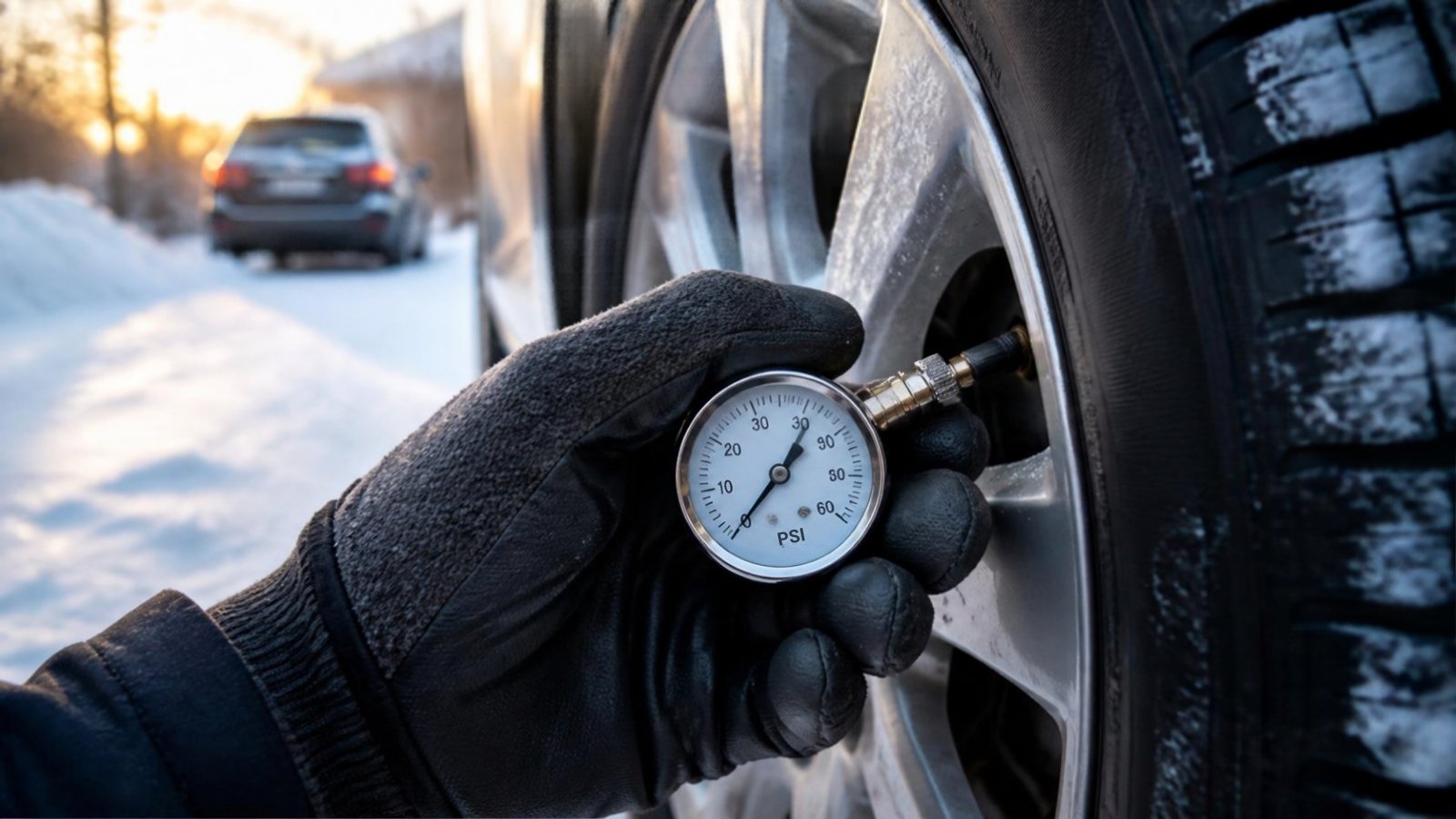
Check your tires when they are cold, set them to the pressure on your door placard, and use a gauge rather than trusting the light. USTMA's guidance is to check at least once a month and to check when the tires are cold, meaning parked for at least three hours.
Find your number. The recommended pressure is on the label on the driver's door jamb or in the owner's manual. Front and rear can differ. The number molded into the tire sidewall is the tire's maximum, not the right pressure for your vehicle.
Check cold. Do it before you drive, or after the vehicle has sat for at least three hours.
Use a gauge on every tire. A dash readout is a good start, but a handheld gauge confirms it.
Fill to the placard. If you fill up in a heated garage, the pressure will drop once the vehicle sits outside in the cold, so recheck outdoors the next morning.
Do not let air out of warm tires. Tires heat up as you drive, which raises the reading. The placard number is a cold number.
Check the spare. FMVSS No. 138's required owner's manual wording says each tire, including the spare, should be checked monthly when cold.
Once the tires are at the right pressure, a solid light should go out on its own after some driving. Some vehicles need a reset button or a menu step, which your owner's manual will cover.
Why is my TPMS light on but my tires are fine?
If every tire checks correct on a gauge and the light is still on, or it flashes at startup, the system has a fault rather than a pressure problem. The usual causes are:
A dead sensor battery. Most direct TPMS sensors sit inside the wheel and run on a sealed battery. Jalopnik puts the battery life at 5 to 10 years and notes the batteries are not replaceable, so the sensor is replaced.
A damaged sensor. Potholes, curb strikes and tire mounting can break the sensor or its valve stem.
Wheels without sensors. FMVSS No. 138 lists the installation of replacement or alternate tires or wheels that prevent the system from working as a cause of TPMS malfunctions.
A relearn that never happened. On many vehicles the system has to be told which sensor sits at which corner after a rotation or sensor replacement.
A receiver or module fault. Less common, and it needs a scan tool to confirm. If other warning lights are on too, our guide to why the check engine light is on explains why a code is a starting point, not a diagnosis.
A sensor whose battery is near the end of its life may drop out on some starts and not others before it fails completely. If the light flashes one morning and not the next, that pattern is worth having checked before winter rather than after.
Direct vs indirect TPMS
Most vehicles use direct TPMS, with a pressure sensor inside each wheel. Some use indirect TPMS, which reads the wheel-speed sensors of the anti-lock brake system and watches for a tire spinning faster than the others, since a low tire has a smaller rolling diameter. Indirect systems have no sensor batteries to wear out, but they usually need a manual reset after you adjust pressures or rotate tires. Your owner's manual will say which type you have.
Why does my TPMS light flash after switching to winter tires?
If your winter tires are mounted on a second set of wheels that do not have sensors, the system cannot find them and will show the flash-then-solid malfunction signal every time you start the vehicle. This is common in northwest Colorado, where a lot of drivers keep a dedicated set of snow tires on their own wheels.
You have two options. You can run the winter wheels without sensors and accept the warning light, checking pressures by gauge every week or two, since the system can no longer warn you. Or you can have sensors fitted to the winter wheels and programmed to the vehicle, so the system keeps working year round.
Winter tires are also tied to Colorado's Traction Law, which sets tread and tire-rating rules for mountain highways. Correct pressure is part of getting the grip those tires are rated for.
Can you drive with the TPMS light on?
You can usually drive a short distance with a solid TPMS light, but check and fill your tires as soon as you safely can. A solid light means a tire is at least 25 percent low, which is enough to affect handling and heat up the tire. If a tire looks visibly flat, you hear flapping or the vehicle pulls hard, stop and change or inflate it rather than driving on it.
With a flashing-then-solid light, the vehicle drives the same, but the system is no longer watching your tires. FMVSS No. 138's own required wording says TPMS is not a substitute for proper tire maintenance. Check pressures by gauge regularly until the fault is repaired, and do not wait for a winter trip to deal with it. A full pre-winter check, like a winterization service, is a good time to sort it out.
Get your tires and sensors checked before the next cold snap
If your TPMS light is flashing, or keeps coming back after you add air, the next step is a proper look at the tires and sensors. Ask for the free digital inspection with photos, so you can see the tread, the valve stems and any damage for yourself, and you get a written estimate before any sensor work is done. Book a visit at our tire shop in Craig or call Chapman's Automotive at 970-550-2883.
Sources
49 CFR 571.138, FMVSS No. 138 Tire Pressure Monitoring Systems (Cornell LII)
U.S. Climate Data, Craig, Colorado climate normals 1991 to 2020
FAQ
Why is my TPMS light blinking?
A TPMS light that blinks for 60 to 90 seconds at startup and then stays on is the system's malfunction signal under FMVSS No. 138. The most common causes are a dead sensor battery, a damaged sensor, or wheels that do not have sensors.
Does cold weather lower tire pressure?
Yes. USTMA says inflation pressure drops one to two pounds per square inch for every 10 degree Fahrenheit drop in temperature. In Craig, the move from fall afternoons to January mornings is enough to trigger the low-pressure light on its own.
Why does my tire pressure light go off after I drive?
Driving warms the tires, which raises the pressure back above the warning threshold. If the light returns on the next cold morning, your tires are sitting right at the limit and need air to the placard number, checked cold.
How long do TPMS sensors last?
Jalopnik puts direct TPMS sensor battery life at 5 to 10 years, and the battery is sealed inside the sensor. When it dies, the sensor is replaced and programmed to the vehicle.
Should I fill my tires to the number on the sidewall?
No. The sidewall number is the tire's maximum pressure. USTMA directs drivers to the label on the driver's door or the owner's manual for the correct pressure.
Questions about your vehicle?
Chapman's Automotive is in Craig, CO — serving the Yampa Valley. Call 970-550-2883 or book online and we'll take a look.