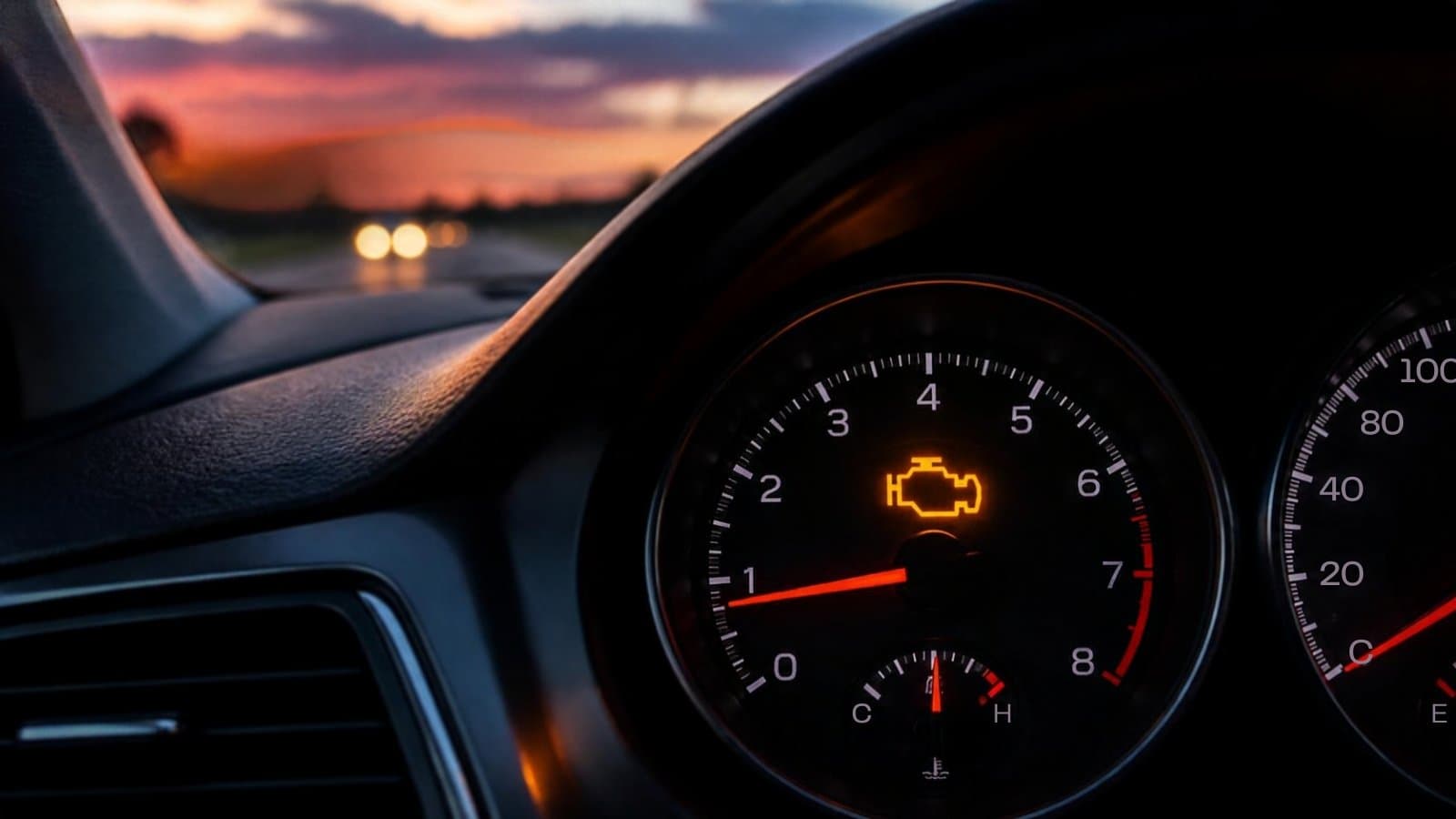
Your check engine light is on because the car's diagnostic computer found a fault affecting emissions or engine operation, from a loose gas cap to a misfire. A steady light means get it checked soon. A flashing light means an active misfire that can damage the catalytic converter, so ease off and stop driving as soon as it is safe.
Why is my check engine light on, and can I keep driving? Those are the two questions you have when the amber engine symbol lights up on US-40 halfway to Steamboat, or starts blinking while you are pulling a trailer up a grade. The answer depends mostly on one thing: whether the light is steady or flashing.
Below, the team at Chapman's Automotive in Craig, CO explains what the light monitors, what steady and flashing each mean, the usual causes, what a trouble code can and cannot tell you, and how to decide whether to keep driving. Out here the next town can be a long drive away, so that last decision matters more than it does in a city.
Key takeaways:
Every 1996 and newer car and light truck uses OBD-II to monitor the engine, transmission and emissions parts, according to the EPA.
A steady light is not an emergency, but it needs a check soon. A flashing light means a misfire severe enough to damage the catalytic converter.
A trouble code names the system and the symptom, not the failed part.
Check the gas cap first: the EPA says the light can take a few short trips to go out after you tighten it.
A red oil pressure or engine temperature warning outranks the check engine light. Pull over and shut the engine off.
Table of Contents
What does the check engine light actually monitor?
The check engine light is your vehicle's engine and emissions warning, and the on-board diagnostic (OBD) computer controls it. According to the EPA's consumer brochure on on-board diagnostics, all 1996 and newer cars and trucks use second-generation OBD (OBD-II) to manage and monitor the engine, transmission and emissions control components. Federal OBD requirements started with the 1994 model year, per the TransportPolicy.net summary of the US OBD standard.
When the computer sees a sensor reading or a component behaving outside its expected range, it stores a diagnostic trouble code and turns the light on. The official name is the malfunction indicator lamp, or MIL. Depending on the make, it may read "Check Engine," "Service Engine Soon," or simply show an engine outline.
There is a built-in self-test you can watch for. The EPA says the light should flash briefly when you turn on the ignition, then stay off while you drive as long as no problems are detected. If it never lights at all when you turn the key, the bulb or its circuit may need attention, which means the system cannot warn you.
Steady or flashing: what is the difference?
A steady light means a fault has been detected and stored, and you should get it checked soon. A flashing light means a severe misfire is happening right now.
The EPA brochure is calm about a steady light: there is no cause for panic, and the vehicle is telling you to seek attention soon. It also warns that the underlying condition can waste fuel, shorten engine life or cause excess pollution, and that leaving it unaddressed can lead to increasingly expensive repairs.
A flashing light is different. The EPA describes it as a severe engine problem "such as a catalyst-damaging misfire." When a cylinder misfires, unburned fuel goes out into the exhaust and burns inside the catalytic converter, overheating it. A Ford owner's manual puts the risk plainly: under misfire conditions, excessive exhaust temperatures could damage the catalytic converter, the fuel system, interior floor coverings or other components, possibly causing a fire.
| What you see | What it usually means | What to do |
|---|---|---|
| Light flashes briefly when you turn the key, then goes out | Normal self-check | Nothing |
| Steady light, car drives normally | A fault has been stored | Check the gas cap, then book a diagnostic soon |
| Steady light plus rough running, hesitation or power loss | A fault that affects how the engine runs | Short, gentle trips only, no towing, get it checked promptly |
| Flashing light | Active misfire that can damage the catalytic converter | Ease off, avoid heavy loads, stop as soon as it is safe |
| Red oil pressure or high temperature warning | The engine itself is at immediate risk | Pull over and shut the engine off |
If the light flashed even once and then settled to steady, treat it as a flashing light. The computer saw a misfire bad enough to flash, and that is worth knowing about before your next long drive.
Check engine light flashing on a Ford
Ford's owner's manual language is direct. In the manual linked above, a blinking light means engine misfire is occurring which could damage the catalytic converter, and Ford tells you to drive in a moderate fashion, avoid heavy acceleration and deceleration, and have the vehicle serviced at the first available opportunity.
That manual also describes a separate "Check Fuel Cap" light on equipped models. Ford says continuing to drive with it on can trigger the check engine light, and that after the cap is reinstalled properly the light turns off after a period of normal driving that varies with conditions. Wording differs by model year, so check the manual for your F-150, Super Duty or other Ford. For Ford-specific diagnosis and repair, see our Ford repair page.
Why is my check engine light on? The common causes
The light usually traces back to one of a handful of systems. The EPA itself names the two ends of the range: a loose or missing gas cap, which wastes fuel, and engine misfire, which can lead to severe or permanent engine damage. In between are these:
Gas cap and evaporative system: a loose, cracked or missing cap, or a leaking vapor hose or valve, lets fuel vapor escape.
Ignition: worn spark plugs, a failing ignition coil or a damaged plug wire cause misfires, the usual reason a light flashes.
Fuel delivery: a clogged or leaking injector, a weak fuel pump or a vacuum leak throws off the air-fuel mixture.
Oxygen sensors: they measure oxygen in the exhaust so the computer can adjust the mixture, and a failing one costs fuel economy.
Mass airflow sensor: it measures incoming air, and a dirty or failing one can cause hesitation and rough running.
Catalytic converter: a converter that is no longer cleaning the exhaust well sets a code, often as the result of an earlier misfire or oil burning, and a stolen converter will set one too.
EGR and other emissions valves: a stuck exhaust gas recirculation valve or purge valve upsets how the engine runs.
Transmission: OBD-II monitors the transmission as well, so some transmission faults turn on the same light.
Electrical: low battery voltage, a corroded connector or damaged wiring can produce sensor codes that look like part failures.
The light cannot tell you which of these you have. That is the job of the code, and even the code only narrows it down. If testing points to low compression or internal wear, the conversation moves to engine repair, which is exactly why the testing step matters.
Why is reading the code not the same as a diagnosis?
A trouble code tells you which self-test failed and what the computer saw. It does not tell you which part broke.
Take a few common examples:
P0300 or P0301 (random misfire, or a misfire in cylinder 1): the cause can be a spark plug, a coil, an injector, a vacuum leak, low compression or a wiring fault.
P0420 (catalyst efficiency below threshold): the converter may be worn out, or an oxygen sensor, an exhaust leak or an earlier misfire may be behind the reading.
Evaporative leak codes: the gas cap is the first suspect, but a cracked hose or a stuck valve sets the same family of codes.
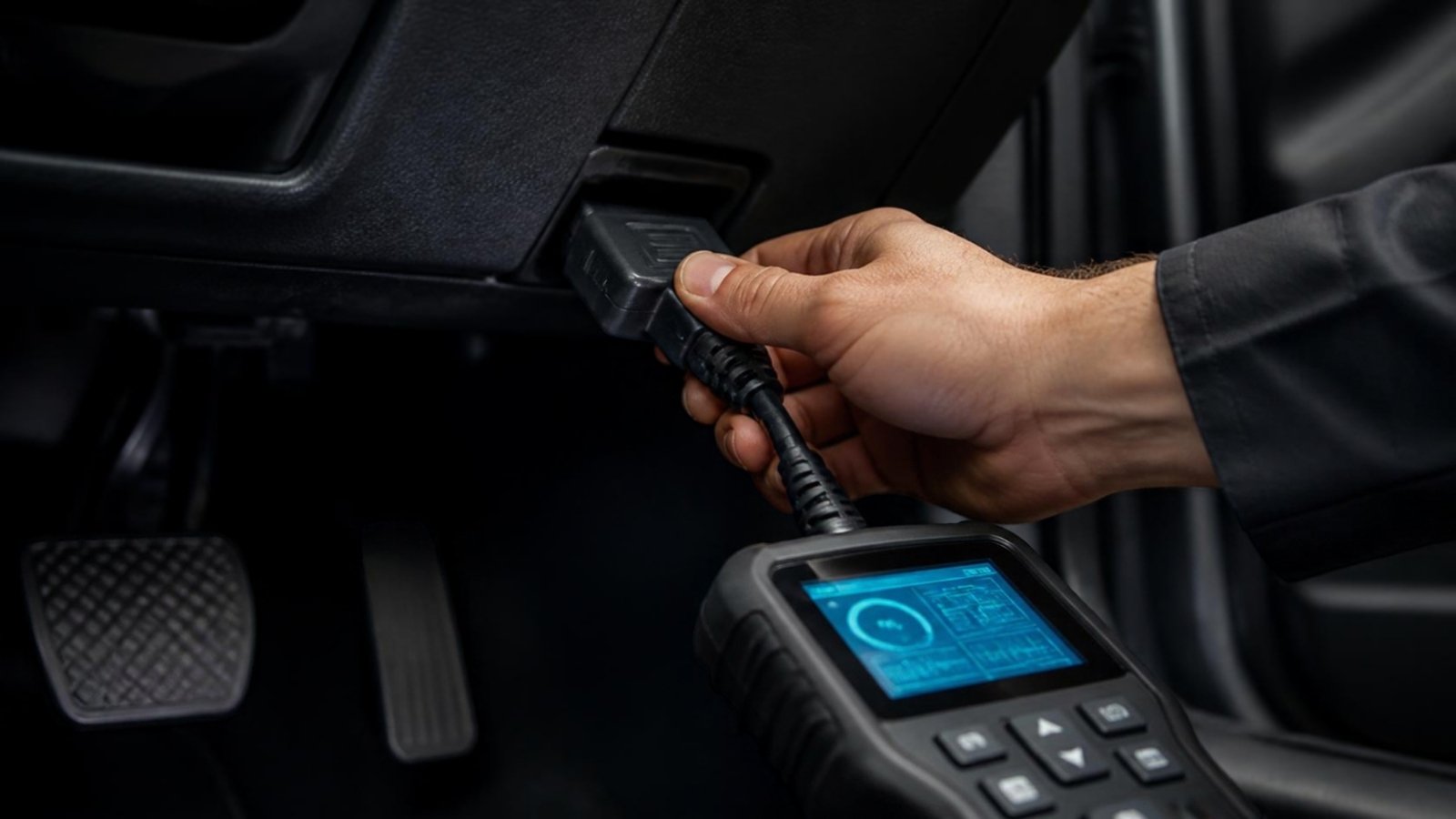
A basic code reader gives you the code and little else. Replacing whatever part the code mentions and hoping is how a simple fault turns into three parts and the same light. A proper diagnosis starts with the stored and pending codes, reviews the freeze-frame snapshot of conditions when the code set, watches live sensor data, and then tests the specific circuit or component the evidence points to. The EPA describes the same process from the technician's side: a scan tool connects under the dashboard and downloads information that can pinpoint the problem. That is what our auto diagnostics service is built around.
Can you keep driving with the check engine light on?
With a steady light and a car that drives normally, usually yes, gently and for a limited time while you arrange a check. With a flashing light, drive no farther than you have to.
Sources differ on how hard to stop, so here is each one:
The EPA brochure (2002 revision) says that with a blinking light you can still drive safely but should minimize your time on the road and avoid high speed or excess weight, such as towing or carrying heavy equipment.
The Ford manual says to drive moderately and get service at the first available opportunity, and warns that misfire heat can damage components and possibly cause a fire.
Our own advice, on our diagnostics page and here, is firmer: when the light flashes, get off the road as soon as it is safe and have it looked at before you drive on.
The reason we lean toward stopping is local. A flashing light on a long, empty stretch of US-40 or CO-13, with a horse trailer, a camper or an elk-season load behind you, is exactly the high-load situation the EPA tells you to avoid. Every mile under a hard misfire adds heat to the converter, and the next shop may be a long way off.
A steady light deserves more urgency when it comes with symptoms: shaking, stalling, hesitation, a loss of power, a fuel smell or a burning smell. And if a red temperature or oil pressure warning comes on, stop. For overheating, AAA advises that you pull over safely, turn off the engine and call for a tow rather than keep driving.
What should you do first when the check engine light comes on?
Work through these in order:
1. Notice whether the light is steady or flashing, and how the vehicle feels: shaking, power loss, smells or other warning lights. 2. Check the temperature and oil pressure gauges. If either shows a red warning, pull over and shut the engine off. 3. If the light is flashing, reduce speed, avoid hard acceleration and heavy loads, and stop as soon as it is safe. 4. If the light is steady, check the gas cap at your next stop. The EPA says to make sure it is not loose or missing, and to always turn the engine off when refueling. 5. Give it a few short trips. The EPA says that if the light does not go out after a few short trips following a cap fix, have the vehicle serviced soon. 6. Write down when it happened: cold start, highway speed, towing, right after a fill-up. That detail helps a technician match the stored data to the real-world condition.
Do not simply clear the code and move on. Clearing it turns the light off, but the fault is still there, and the light comes back when the computer sees it again.
Get a real answer before you spend money on parts
If your check engine light is on, or it flashed even once, the next step is a proper diagnosis rather than a guess. Book auto diagnostics: we read the stored and pending codes, test the system they point to, and give you a plain-English explanation and a written estimate before any work starts. Ask for a free digital inspection with photos while the vehicle is in, and if you need to keep moving, ask about our free loaner cars and shuttle. Call Chapman's Automotive in Craig at 970-550-2883.
Sources
EPA, On-Board Diagnostics consumer brochure (EPA420-F-02-016)
Ford Motor Company, 2001 Grand Marquis Owner's Guide (instrumentation section)
FAQ
Why did my check engine light come on and then go off by itself?
The EPA says that usually means the system saw a problem that has since corrected itself, such as a gas cap that was tightened or a fouled spark plug that cleared. No special attention is needed unless the light comes back. If it keeps returning, have it scanned, because an intermittent fault is easier to track down with the stored code data in hand.
Will a check engine light fail an emissions test in Colorado?
Inside the program area, it can. Air Care Colorado runs a plug-in OBD test on 1996 and newer light-duty vehicles, and says a warning light that stays on at inspection results in a failed inspection or an advisory. That program serves the Denver metro area and the North Front Range, so it matters most if you sell or register a vehicle over on that side of the state.
Can I clear the code or disconnect the battery to turn the light off?
You can, and the light will go out, but the fault is still there and the light returns when the computer detects it again. Clearing also erases the stored data a technician uses to find the cause. With a flashing light, clearing the code does nothing to protect the catalytic converter.
Why does my check engine light only flash when I accelerate or tow?
Misfires often show up under load, when the ignition and fuel systems are working hardest. A weak coil or worn plug may fire normally at idle and fail on a grade with a trailer behind you. Treat it as a flashing light every time, and keep loads light until it is diagnosed.
Is the check engine light the same as the maintenance reminder?
No. Many vehicles have a separate wrench symbol or "maintenance required" message that tracks mileage for oil changes and service. The check engine light is fault-based: it only comes on when the diagnostic system detects a problem.
Questions about your vehicle?
Chapman's Automotive is in Craig, CO — serving the Yampa Valley. Call 970-550-2883 or book online and we'll take a look.